Panel-beating and repair
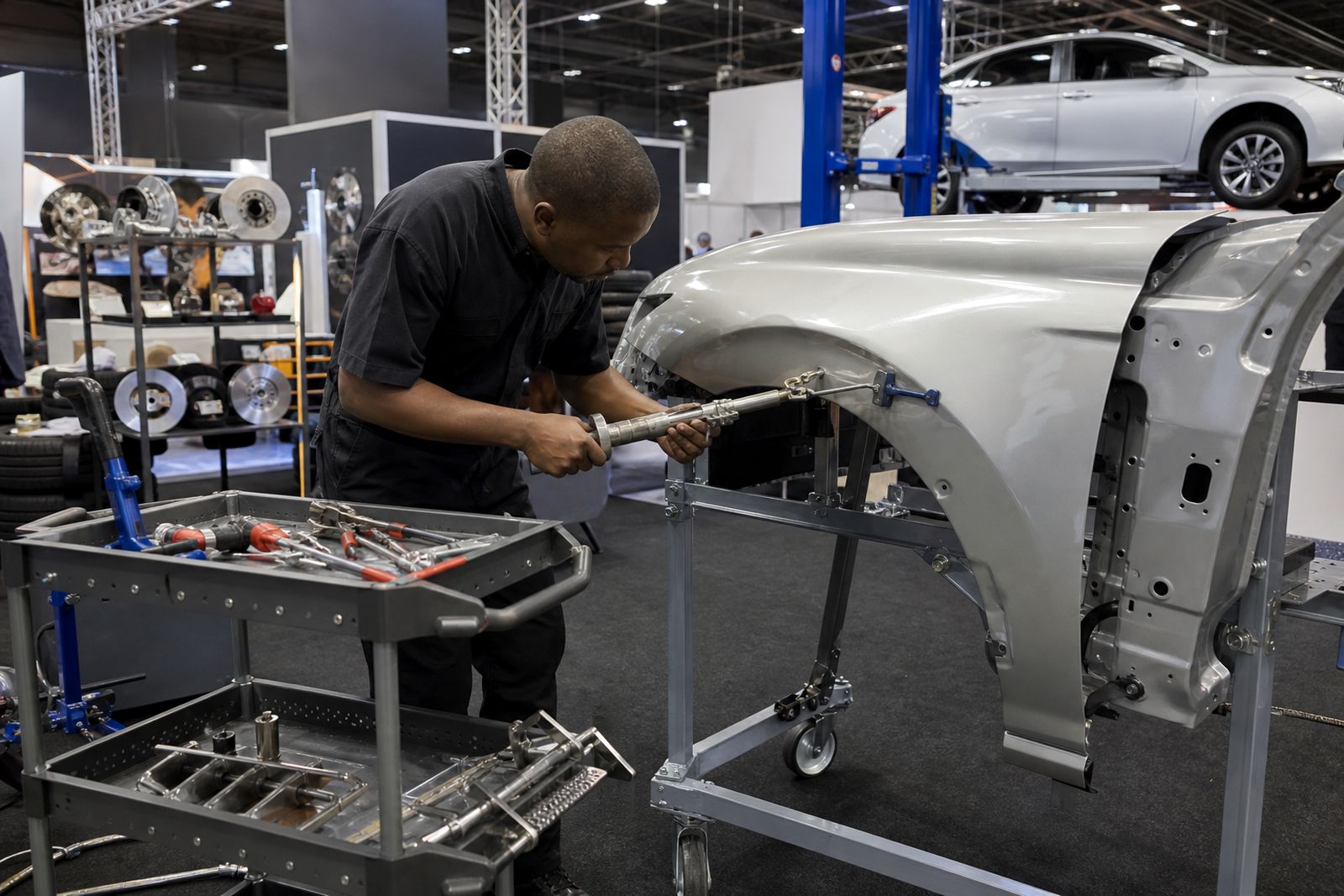
The panel-beating and repair section of our Body Shop Hall is for suppliers showing repair frames, pullers, dent repair kit and related workshop equipment. It is set up for practical conversations with panel shops, repair centres and workshop buyers who want to compare methods, footprints and utility needs before they place orders.
What is included in this section
This section is intended for exhibitors serving the panel repair trade. It suits suppliers of straightening systems, pulling equipment, dent removal tools, measuring aids, repair benches, consumables and support gear used around panel preparation areas. Visitors come here to inspect layouts, watch tool handling, discuss cycle times and compare which setups suit small workshops and larger repair centres.
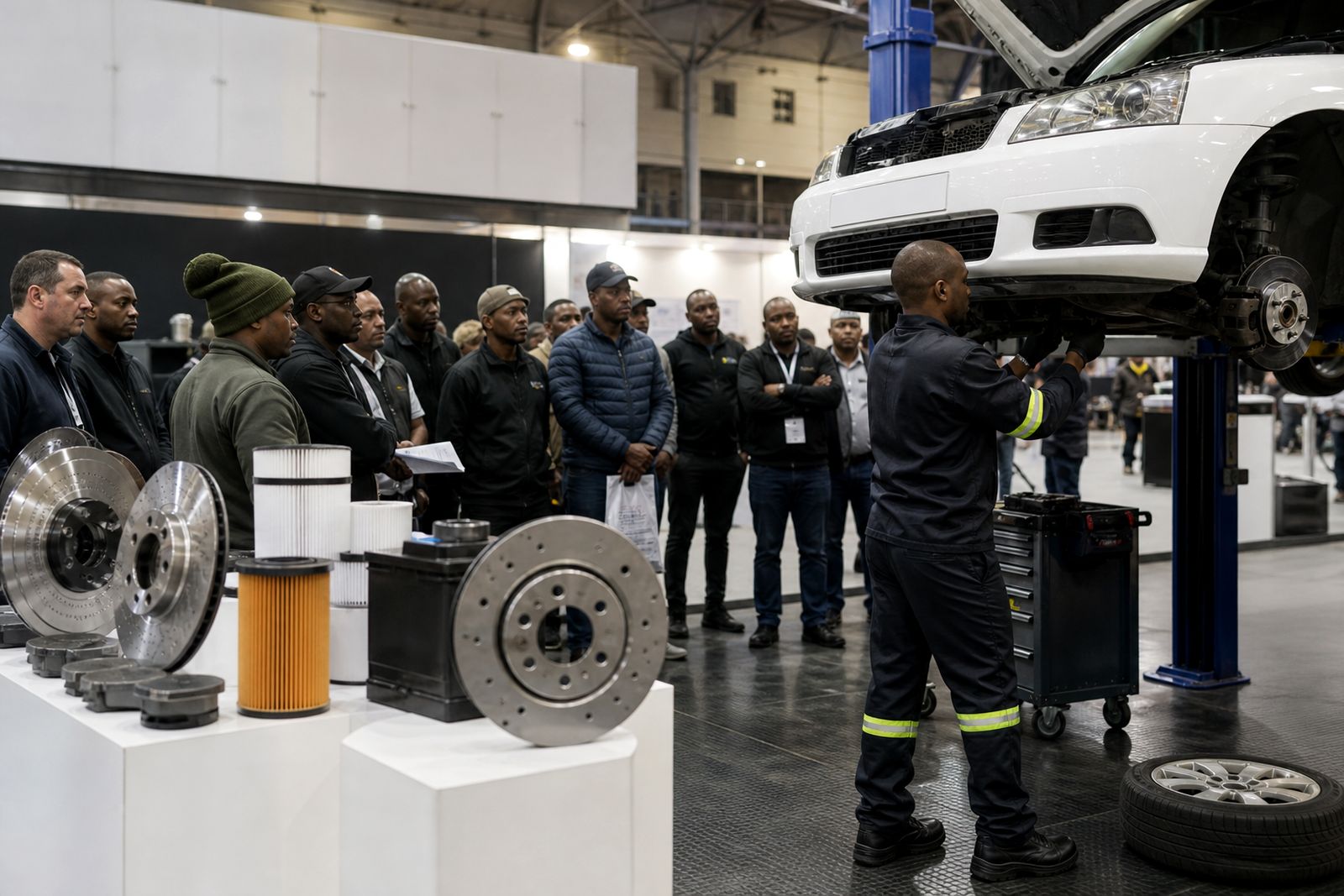
Your place in this section includes positioning within the Body Shop Hall, enquiry handling through our team before the show, and planning support around stand activity. Where a supplier wants to run a live repair demonstration, we work through the footprint, safety boundaries, utility requirements and visitor flow so the stand is practical on the day and not cramped when people gather around it.
- Space suited to panel-beating and repair suppliers
- Planning support for live demo activity
- Guidance on safe stand layout and visitor access
- Placement close to related body shop categories where possible
- Enquiries routed through our contact page for follow-up
Typical equipment and demo formats
Most exhibitors in this area present equipment that can be understood quickly by workshop owners, estimators, parts buyers and operators. Buyers often want to see how a pull is set, how anchoring works, what measuring reference points are used and how much floor area the unit needs once a vehicle is in position. Simple side by side comparisons also work well, especially when showing hand tools against powered options.
Common displays include repair frames with vehicle anchoring points, mobile pullers, dent pulling systems, glue pull kits, slide hammers, spot weld accessories, pulling towers, measuring bars and support items such as work lighting and tool storage. Some exhibitors also show workflow boards and consumable packs so a visitor can understand the full job chain from assessment to repair finish. Keep the demo practical, not too broad, and it usually lands better.
- Repair frames from roughly 4 m to 6 m overall length
- Pulling towers with clear operating zones around the base
- Mobile dent repair kits for smaller bay footprints
- Hand tools and pulling accessories displayed on walling or racks
- Measurement aids that can be demonstrated without blocking aisles
How the process works step by step
Start by sending an enquiry through our contact page with a short description of what you want to show. Tell us whether you are displaying a fixed frame, mobile system, hand tools, or a mixed stand with live demonstrations. If your stand includes heavy equipmet or anything that needs special handling, mention that upfront so we can guide the planning correctly.
We then discuss the stand size, likely visitor interest, and whether your demonstration needs open perimeter space. For example, a static tool display can fit into a tighter footprint, while a pulling frame benefits from wider circulation and better sight lines. If utilities are needed, we confirm them early so there are no surprises when installation starts.
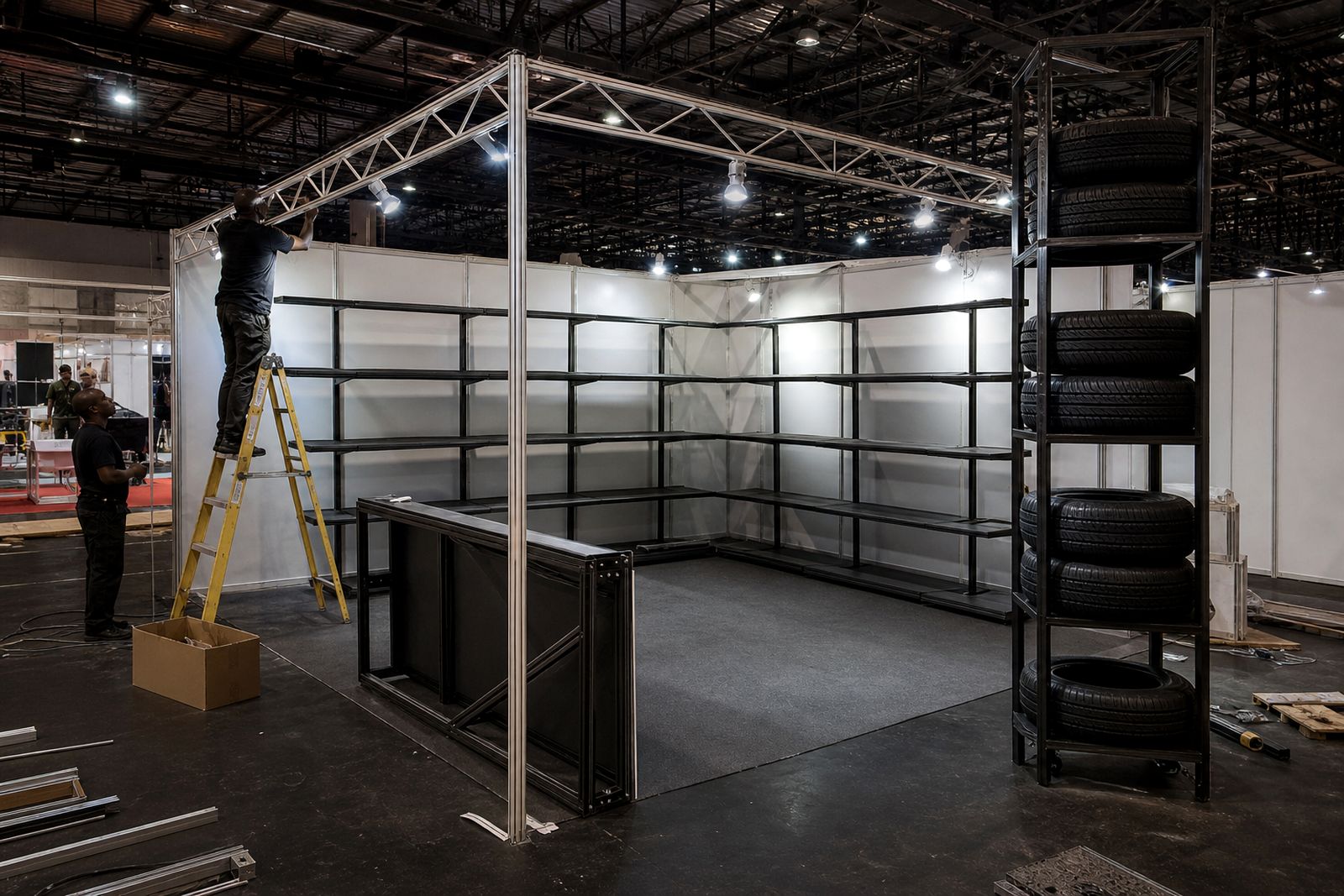
Once the scope is clear, we map your section within the hall, note delivery and set-up needs, and explain the operating conditions for demonstrations. Before the show opens, your team checks placement, completes the stand setup and confirms that all demonstration items are ready for use. During the show, visitors can engage directly at the stand and submit enquiries through the channels we provide.
- Enquiry received and product type confirmed
- Stand footprint and demo style discussed
- Utility and handling requirements reviewed
- Section placement and access planning confirmed
- On-site setup, checks and live demonstration period
What you must prepare before arrival
Come prepared with a clear stand plan and a shortlist of the products that matter most to your target visitor. Too many items on one stand can make the area feel cluttered, especially in body shop categories where buyers need room to inspect frames, towers and pulling points properly. If a unit has moving parts, prepare one short demonstration sequence and train the operator to repeat it safely throughout the day.
You should also prepare handling information, operating clearances, approximate installed dimensions and power needs where relevant. Buyers from Johannesburg and across Southern Africa often ask practical questions about workshop floor space, municipal extraction rules where finishing areas are involved, and how equipment copes with coastal humidity in places such as Durban, Gqeberha and Cape Town. Clear answers help the right buyers qualify themselves quickly.
- Final list of displayed equipment and accessories
- Operating dimensions in metres, including clearances
- Power requirements if any tools are energised on the stand
- Safe demo sequence and operator briefing
- Printed product notes for frame size, pull capacity and anchoring method
How pricing is worked out
Pricing is worked out according to the size and position of the stand, the complexity of the demonstration and any special handling or utility requirements. A simple product display with hand tools and compact kits will usually be more straightforward than a large frame or tower setup that needs extra floor area, managed access and more time for installation. The more technical the demonstration, the more important accurate planning becomes.
We also look at whether your stand needs additional open perimeter space for crowding control, heavier floor loading considerations, or a specific adjacency within the Body Shop Hall. If you are showing multiple product groups, we can advise whether one larger stand or a tighter focused presentation is the better fit. Final costing is discussed after we understand the practical scope, not from guesswork.
Aftercare and follow-up after the show
Good follow-up matters as much as the stand itself. After the show, suppliers should work through enquiries while the discussions are still fresh, especially where a buyer asked for floor plans, dimensions, pulling ranges or installation notes. Our role is to make the section relevant and easy to navigate, then direct enquiries through the contact route provided on the site.
For your own aftercare, prepare a simple pack covering footprint, utility needs, recommended bay layout and a shortlist of optional accessories. Workshops dealing with power cuts may ask about manual fallback options, restart procedures or whether certain accessories can be used independently. Body shops near the coast may focus more on storage conditions and surface protection for tools and exposed metal components, so keep those answers ready too.
The best exhibitors treat the show as the start of a sales process, not the end. If your team records which buyers asked about compact repair bays, high-throughput panel sections or mobile dent work, follow-up becomes a lot easier later on.
What our Aftermarket Trade Show customers say
Verified Google reviews
Questions we get asked
Can we show both a repair frame and small dent repair tools on one stand?
Yes, if the stand footprint allows clear movement and safe viewing. We will guide you on whether the layout suits one combined stand or whether a tighter product focus will work better.
Do we need to prepare technical information for visitors?
Yes. Bring operating dimensions, clearance requirements, power needs where relevant, and basic notes on anchoring, pull methods and recommended workshop space.
How do buyers contact us after the show?
Initial enquiries reach us through the contact form on our site. From there, follow-up can be coordinated according to the enquiry details gathered during the show.
Also worth a look
Book a stand or register to visit
Send a note through our contact form saying whether you supply parts or equipment, or run a workshop, distributor or fitment centre, and our team will reply with the next steps.
Open the contact form