Visit the show
Africa Trade Show brings together the aftermarket categories most buyers need to compare in one visit. This page helps distributors, workshops and fitment centres decide which areas to prioritise and how to get the most from the show floor.
Who should attend
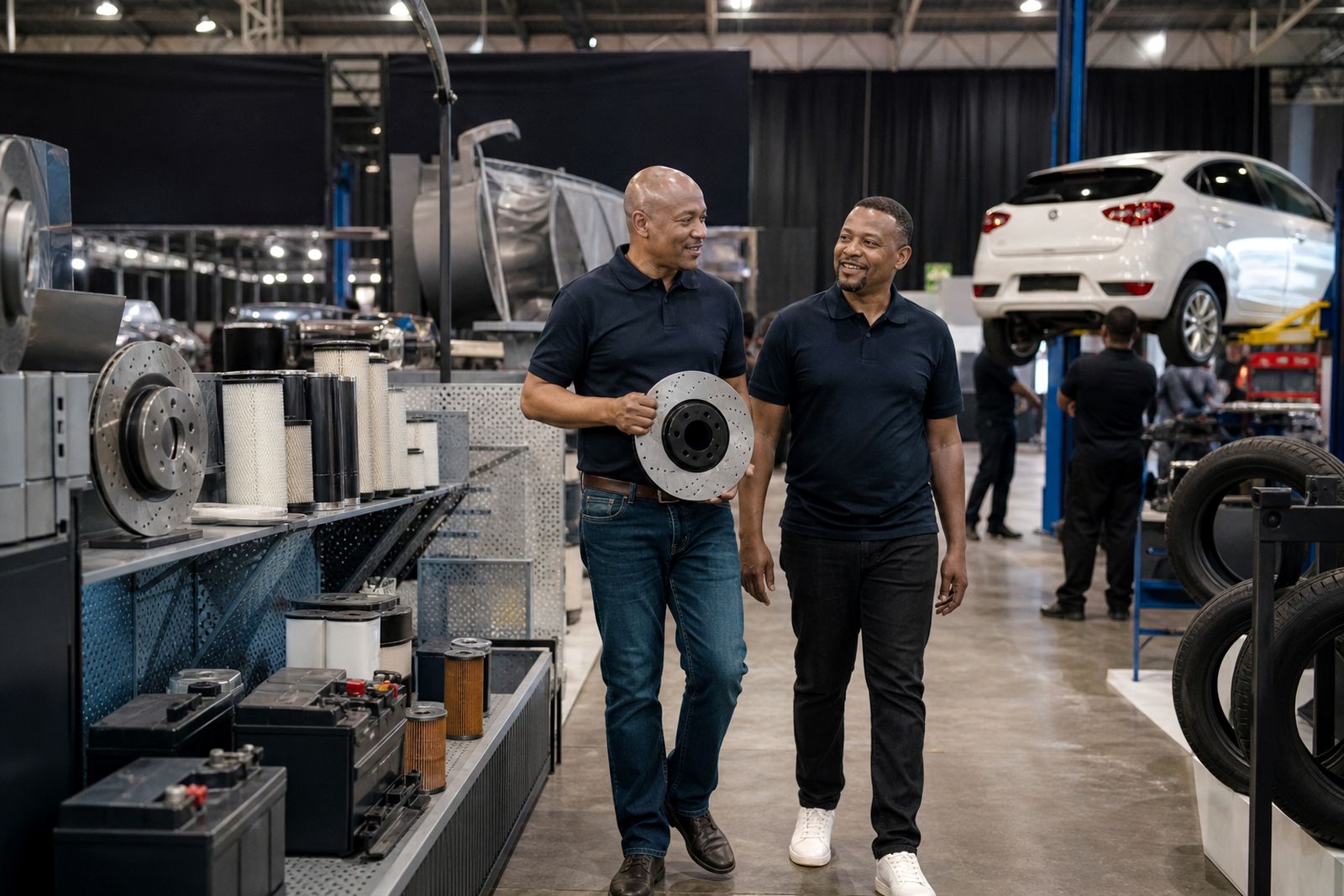
This section is for trade visitors who source, specify, fit or support automotive aftermarket products. Most visitors come with a buying list, a replacement brand under review, or a need to compare new ranges side by side before placing stock into branches, workshop stores or fitment bays.
If your work involves fast moving service parts, batteries, tyres, workshop tools or collision repair equipment, the show gives you a practical way to compare options in Johannesburg without driving between multiple supplier sites. Buyers from across Southern Africa usually split their day between the main parts floor, live demo areas and the body shop hall so they can cover both sales lines and technical questions in one trip.
- Parts distributors reviewing stock lines, packaging and supply support.
- Independent workshops comparing service parts and workshop equipment.
- Fitment centres looking at tyres, batteries, balancing, testing and bay workflow.
- Body repair businesses assessing panel-beating and spray booth suppliers.
What you can compare at the show
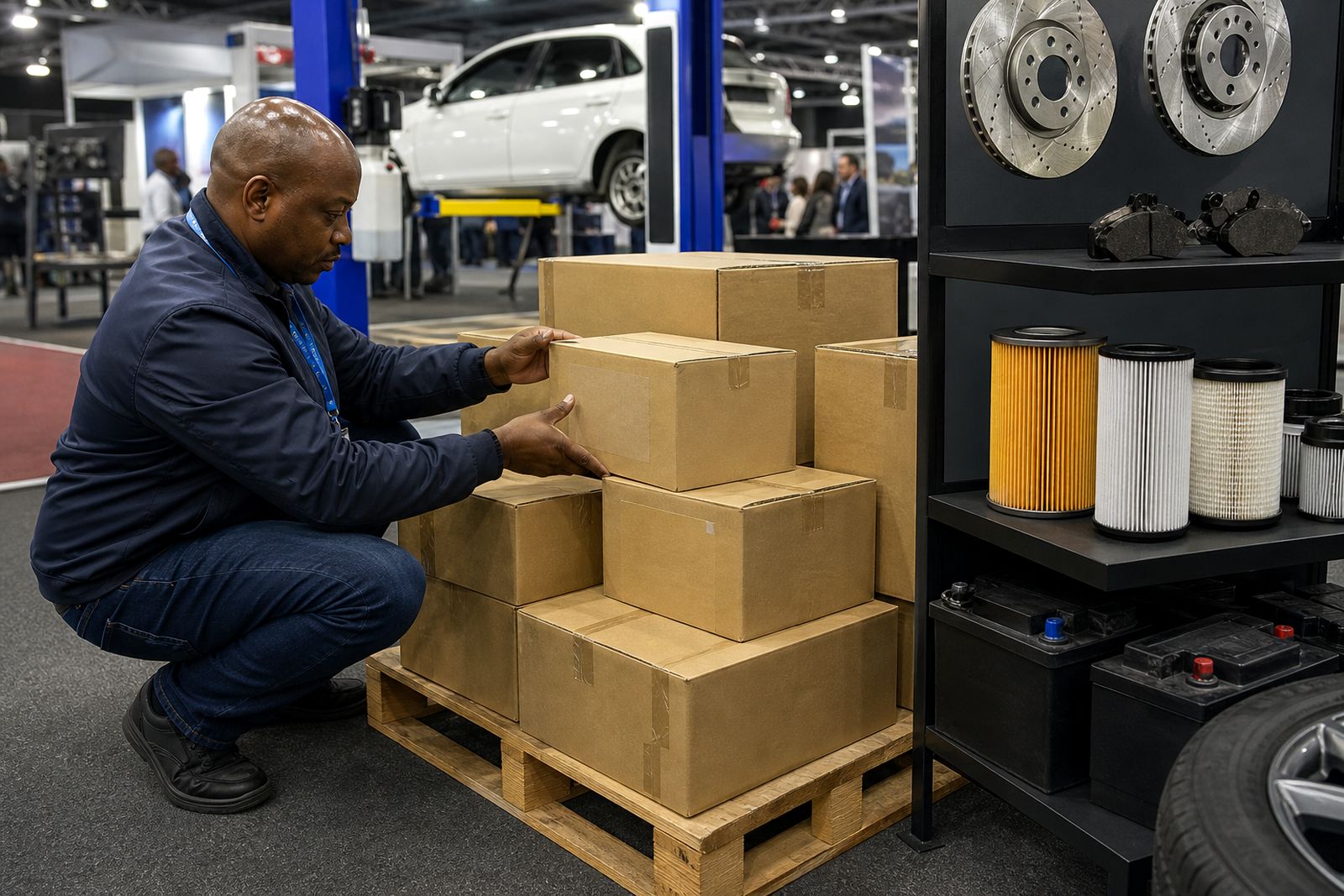
The visit section covers the main buying routes through the event. On the exhibition floor you can compare brake, filter, battery and tyre ranges, then move to the live demo areas for hands-on product use and fault-finding discussions. A separate body shop hall focuses on collision repair, extraction, prep areas and paint process equipment.
For many visitors the value is not only seeing products on display, but understanding stock depth, fitment support, warranty handling, training availability and whether a supplier suits your market. A distributor with branch demand in several towns may look at range width and merchandising support, while a workshop may care more about vehicle coverage, turnaround time and technical backup. That difference matters when planning your route.
Choose your route by business type
If you are unsure where to start, use your business model to narrow the visit. The pages under this section break out the main visitor types, so you can go directly to the information most relevant to your buying role.
- Parts distributors: Best if you need to compare supplier range depth, channel support, pack sizes and margin structure across multiple categories.
- Workshops and fitment centres: Best if you need practical fitment information, consumables, service tools and products that affect daily turnaround.
- Body shop visitors: Best if your focus is repair flow, extraction, booth equipment, prep areas and finishing quality.
- Technical teams: Best if you want live diagnostics, testing and installation demonstrations before making a buying recommendation.
A good rule is simple. If your business sells parts onward, start with distributors. If your team installs and services vehicles, start with workshops and fitment centres. If your operation repairs accident damage, set aside time for the body shop hall first because those discussions often take longer.
Distributors versus workshops and fitment centres
Both visitor groups buy aftermarket products, but they usually assess suppliers differently. Knowing which side your team leans toward can save a lot of walking and a fair bit of backtracking.
- Distributors often compare: branch demand, part number coverage, shelf movement, regional support, returns handling and supply consistency.
- Workshops often compare: installation time, technical fit, failure rate concerns, vehicle parc relevance and after-sales support.
- Fitment centres often compare: bay throughput, test equipment, wheel and battery workflow, consumables and customer waiting times.
- Mixed businesses often compare: whether one supplier can support both front counter sales and workshop usage without creating stock duplication.
In short, distributors tend to ask, “Can this range move through my network?” Workshops tend to ask, “Will this save time and come back less?” A fitment centre may care more about queue flow and battery or tyre turnaround than shelf presentation. Those are small differences but they shape the whole visit.
Plan a practical day on the floor
Start with the categories that affect your current purchasing cycle. If a tyre range review is urgent, go there first while your team is fresh and before informal meetings pull you off schedule. If you are comparing technical equipment, leave enough time for demos, because the useful detail usually comes out in questions after the formal presentation.
Johannesburg traffic can change your arrival window, so keep your first hour flexible. Wear closed shoes, carry your product list and note the vehicle applications or sizes you need to check. If your branch or workshop is in a coastal area, ask specifically about storage, corrosion exposure and packaging durability. If your operation loses time during power cuts, ask suppliers how their equipment and testing process cope when mains power is interrupted, that question often gets missed.
- List your top five buying priorities before you arrive.
- Separate immediate purchases from longer term supplier reviews.
- Bring technical staff if you need installation or diagnostic answers on the spot.
- Take photos of product information only where permitted on the stand.
- Use the contact page after the show if you need a follow-up from the organisers.
Use the live demo and body shop areas well
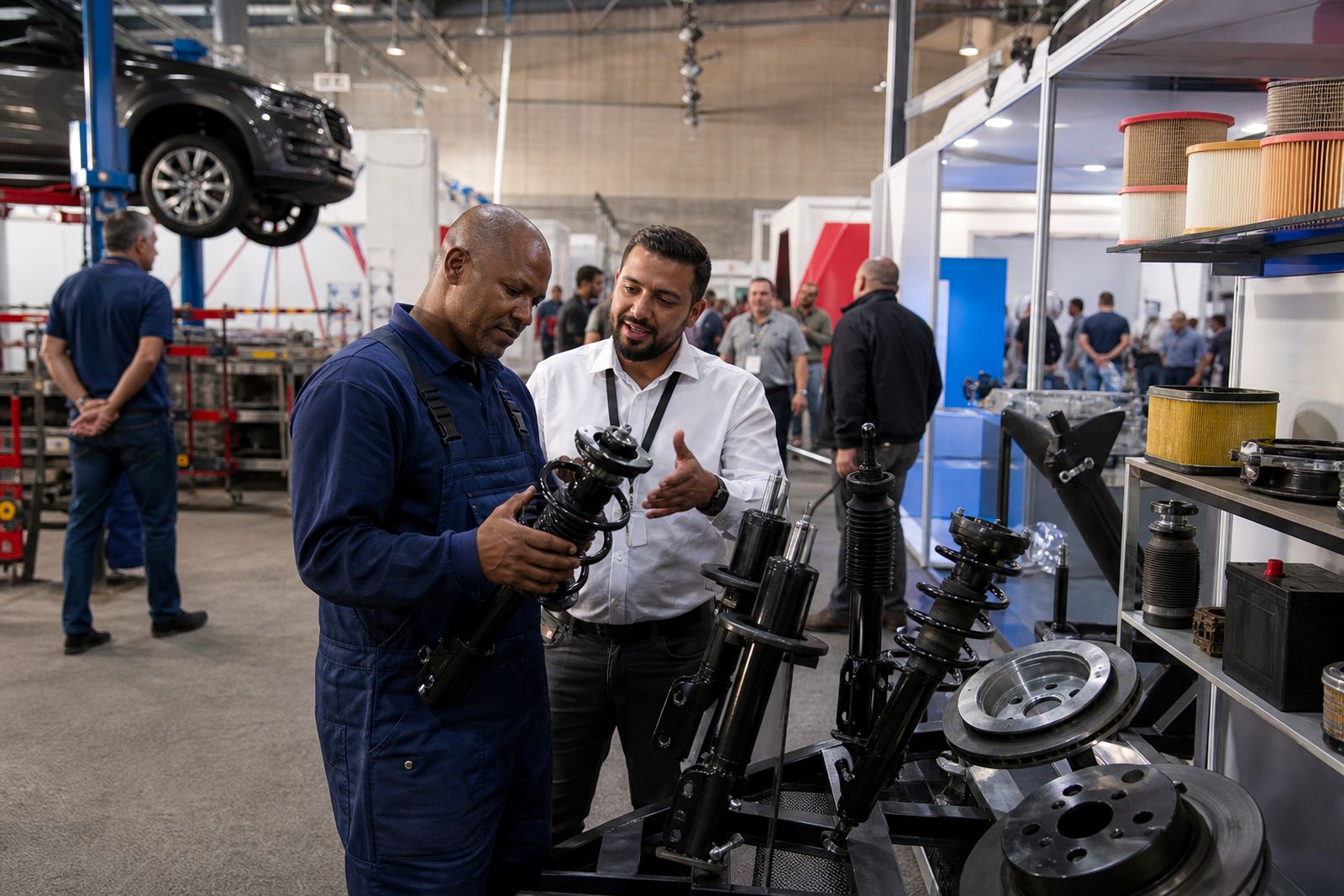
The live demo areas are useful when a product claim needs to be seen in practice. Brake and suspension sessions can help workshop teams compare procedures, while diagnostics and battery demos are better for testing workflow, fault tracing and tool handling. If your technicians need proof before changing a preferred product line, this is where you should spend proper time.
The body shop hall is different from the main parts floor. Conversations there usually cover extraction, booth layout, prep space, air supply, repair sequence and operator working conditions. If your business handles panel work or refinishing, do not leave that hall for the end of the day when everyone is rushed. The details matter and some stands need a longer chat to cover municipal site limits, venting requirements and workshop layout constraints.
What our Aftermarket Trade Show customers say
Verified Google reviews
Questions we get asked
Is the show only for large parts distributors?
No. The show is also relevant to independent workshops, fitment centres and body repair businesses that need to compare products, equipment and support options.
Can I focus only on workshop and technical content?
Yes. Start with the workshops and fitment centres section, then spend time in the live demo areas where installation, testing and diagnostics are shown in practice.
How do I contact the organisers about visiting?
Please use the enquiry form on the contact page and the team will respond with the relevant visitor information.
Book a stand or register to visit
Send a note through our contact form saying whether you supply parts or equipment, or run a workshop, distributor or fitment centre, and our team will reply with the next steps.
Open the contact form