Workshops and fitment centres
Africa Trade Show gives independent workshops and fitment centres a practical way to compare parts ranges, tools and repair equipment in one place. A day on the floor helps your team check fitment options, watch live demos and speak directly with suppliers serving Southern Africa.
Why workshops come to the show
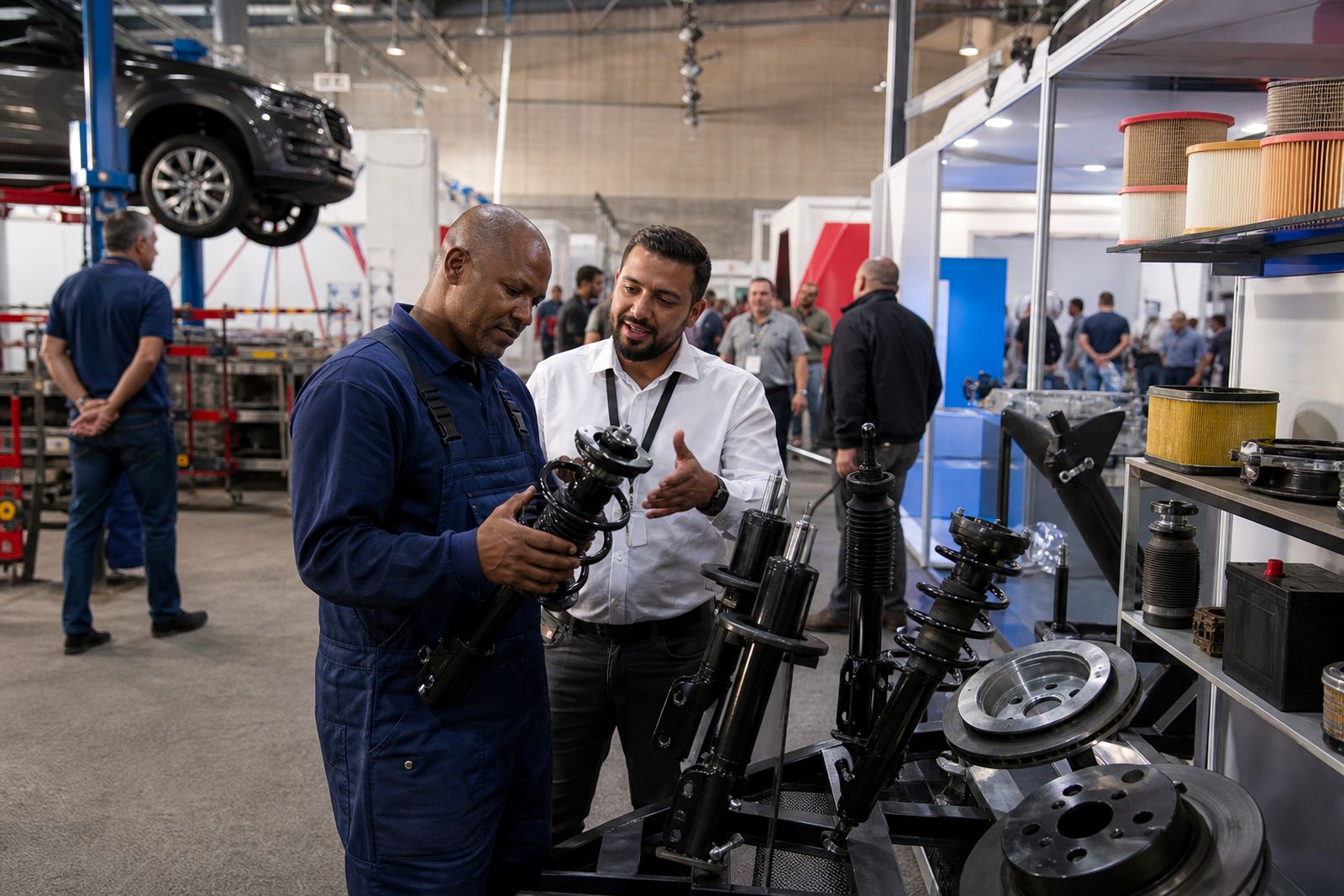
If you run an independent workshop, tyre fitment bay, battery fitment point or general service centre, the show helps you compare product ranges and service support without driving from branch to branch. You can move between parts supplier stands, the tyre and battery zones, live demo areas and the body shop hall to see what suits your daily jobs.
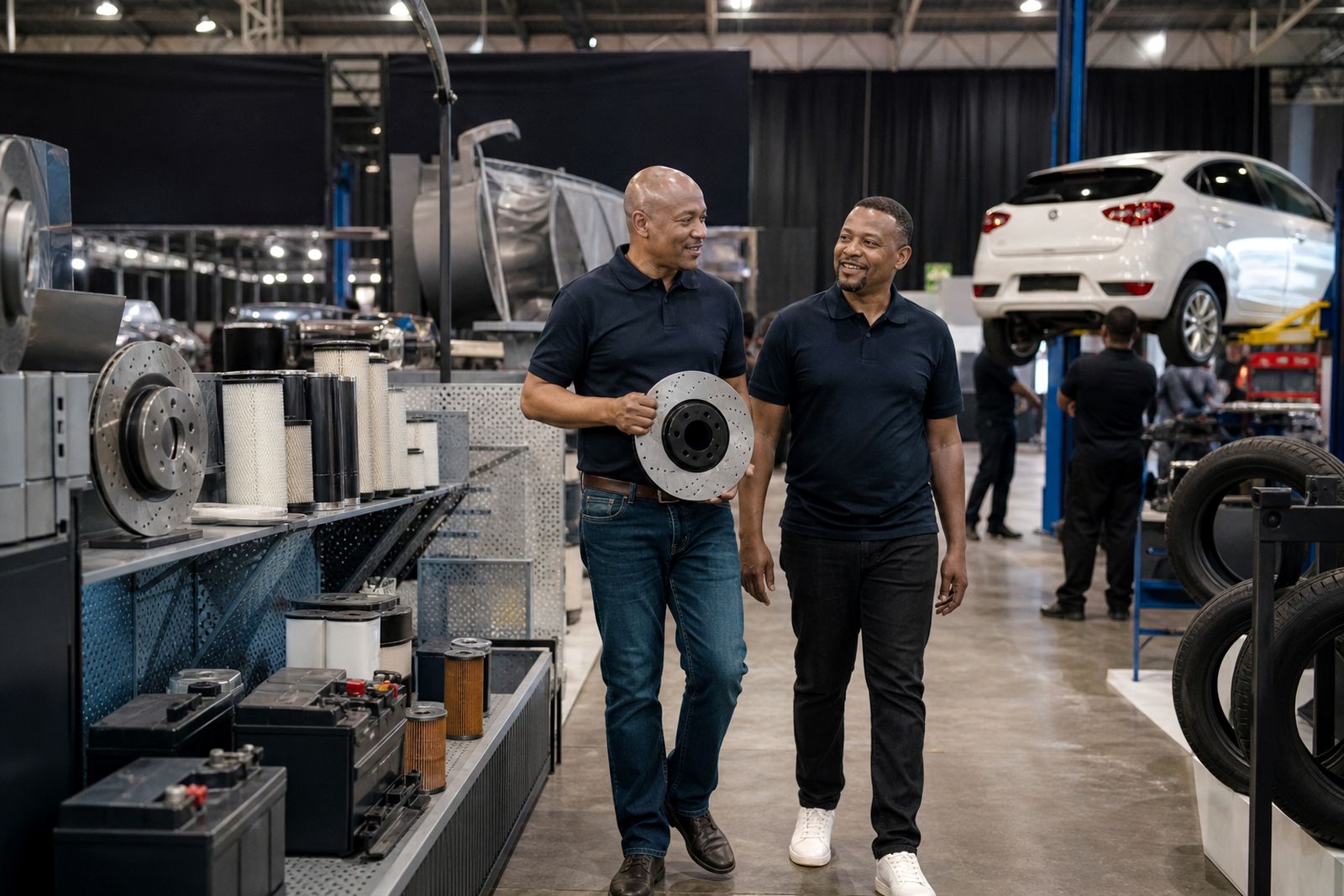
Most workshop visitors come to solve ordinary operating issues: brake line coverage, filter availability, battery application matching, wheel service equipment, workshop consumables, diagnostics and repair process questions. Instead of relying on a catalogue alone, you can inspect components by hand, ask about stockholding models for South African conditions and check whether a product line makes sense for your customer base.
- Compare brake, filter, battery and tyre ranges side by side
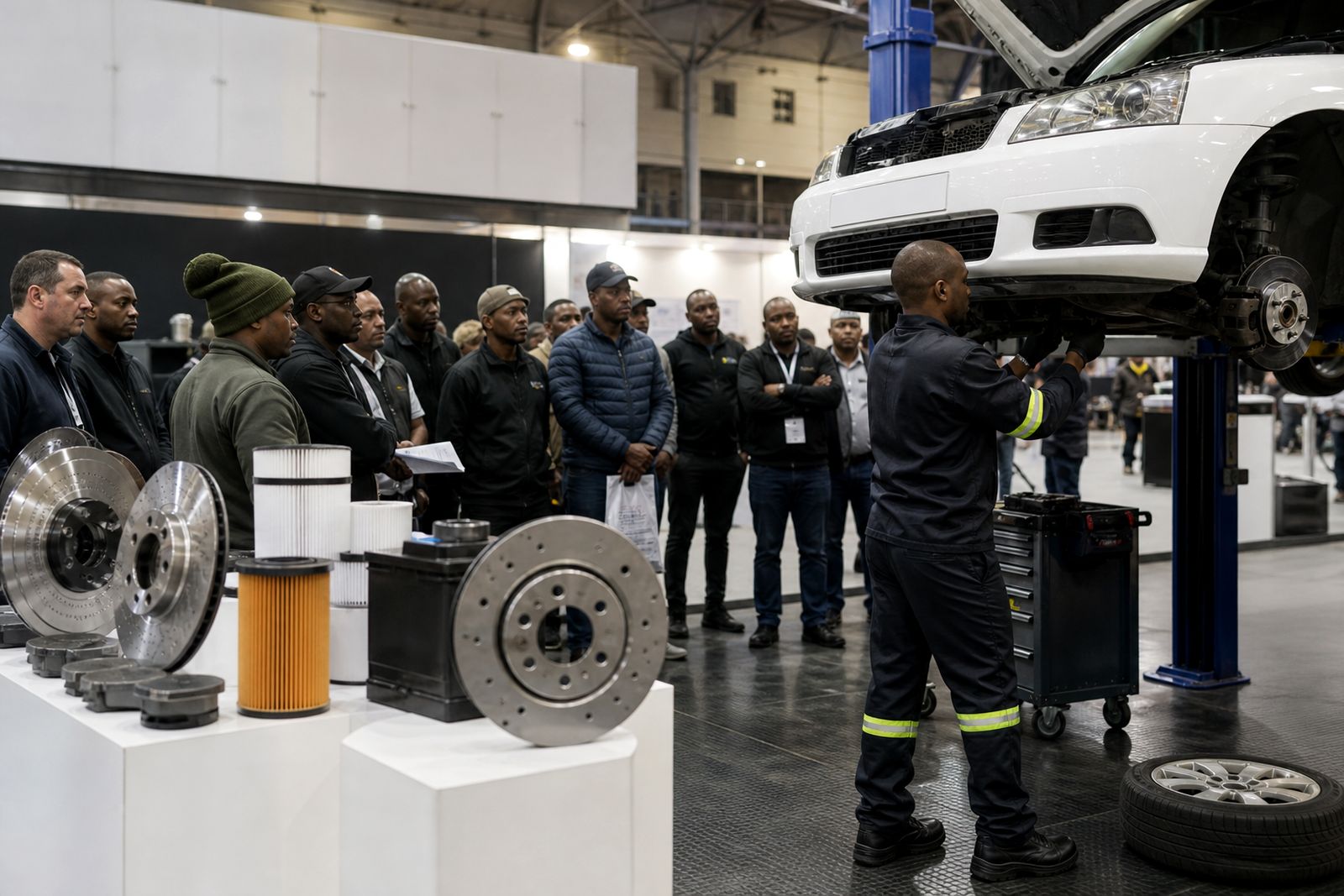
- Watch live workshop demonstrations before you commit to a supplier discussion
- Ask about technical backup, delivery regions and warranty handling
- See body repair and spray booth suppliers in a dedicated hall
- Meet suppliers that work with workshops and fitment centres across Southern Africa
What is included for workshop visitors
Your visit is centred on floor access to the automotive aftermarket trade show, including public show areas relevant to workshop operations. That means access to exhibitor stands focused on service parts and consumables, selected equipment displays, live demo viewing areas and the specialist hall for panel-beating and spray-related suppliers.
You also get the benefit of seeing products in context. A tyre balancer, battery tester, brake service item or filter range means more when you can compare it against neighbouring options in the same walk-through. For smaller workshops this saves time, and for multi-branch operators it helps standardise buying discussions before internal sign-off.
- Access to parts supplier stands for service and repair categories
- Access to tyre and battery zones for fitment-focused comparisons
- Access to live workshop demos covering practical procedures
- Access to the body shop hall for repair and finishing equipment research
- On-floor supplier conversations for stock, support and application questions
How to plan your day step by step
Start with your job mix. A workshop doing mainly brakes and routine services should begin in the parts sections, then move to brake and suspension demos. A fitment centre with a strong battery and tyre turnover should head first to those zones, then compare related diagnostics and testing equipment. If you handle accident repairs or subcontract refinishing work, leave enough time for the body shop hall as well.
On arrival, split your route into product groups instead of trying to cover every aisle in order. One operator can focus on service parts while another checks equipment and demo sessions. Keep notes stand by stand, because after three or four technical conversations details can blur a bit.
- List your buying priorities before you travel to Johannesburg.
- Identify which product groups matter most to your workshop revenue.
- Visit those stands first while your team is fresh.
- Watch the relevant live demos and note practical differences.
- Ask suppliers about regional support, lead times and returns handling.
- Collect technical literature and compare it back at the workshop.
If you are travelling in from outside Johannesburg, build in enough time for traffic and same-day follow-up notes before heading back. Buyers from neighbouring countries usually get the most value when they arrive with a firm shortlist and clear purchasing questions.
What to prepare before you attend
The best workshop visits are planned around real workshop data rather than general interest. Bring a list of your fastest-moving service items, common fitment complaints, tool gaps and any recurring warranty issues. If your branch network covers different vehicle parc profiles, note those differences so your questions stay relevant.
It also helps to decide who from your side is attending. The owner, branch manager, buyer, foreman or lead technician will all look for different answers. One might focus on margin and delivery terms while another checks ease of fitment and workshop time per job, and both viewpoints matter.
- A shortlist of product categories you need to review
- Typical monthly usage by line, if you track it
- Questions on warranty handling and technical backup
- Photos or notes on equipment constraints in your workshop
- A rough budget range for future purchases, even if not final
- Comfortable shoes, because floor distances can be longer than expected
How visitor pricing usually works
Visitor access terms are set by the organiser and can vary by visitor type, package structure and what is included for that particular edition of the show. Workshops and fitment centres should treat travel, accommodation, staff time and any internal procurement follow-up as part of the true cost of attending, not only the entry side.
For many independents, value comes from how many supplier meetings and product checks can be completed in one day. If your team can compare several ranges, watch the right demos and narrow down a buying list, the trip often saves repeat travel and back-and-forth quotations later. For current visitor access details, use the enquiry form on the contact page.
If you are sending more than one person, decide in advance whether each attendee has a separate brief or whether you need a shared reporting template. That small bit of prep usually makes the spend easier to justify afterwards.
Aftercare and follow-up after the show
The real return comes after you leave the floor. Within a day or two, sort brochures, business cards and notes by category: parts supply, workshop equipment, diagnostics, tyre service, battery service and body repair. Then score each option against your own criteria such as product coverage, support area, availability and workshop practicality.
Good follow-up normally includes a short internal review meeting. Confirm what needs a quote, what needs a technical trial and what can be parked for later. If a supplier promised application data, lead times or installation requirements, chase that while the discussion is still fresh. Leaving it too long tends to slow down buying decisions.
Where equipment is involved, measure your bays and power supply requirements before asking for final proposals. A machine that looks right on the stand still has to fit your floor plan and daily workflow. This catches problems early and saves frustration later.
- Review notes and literature by product category
- Request quotations only for shortlisted items
- Check workshop space, power and air requirements where relevant
- Compare warranty and service support before sign-off
- Keep one record of all supplier conversations for your team
What our Aftermarket Trade Show customers say
Verified Google reviews
Questions we get asked
Is this show suitable for small independent workshops?
Yes. Smaller workshops often benefit because they can compare several supplier options in one trip and focus only on the product groups that matter to their daily work.
Should I bring my workshop manager or technician?
If possible, yes. A buyer may focus on pricing and supply terms while a manager or technician can judge fitment practicality, tool suitability and likely workshop time.
How do I get visitor details?
Send your enquiry through the form on the contact page and we will guide you on visitor access and the most relevant areas for your workshop.
Also worth a look
Book a stand or register to visit
Send a note through our contact form saying whether you supply parts or equipment, or run a workshop, distributor or fitment centre, and our team will reply with the next steps.
Open the contact form