Body shop hall
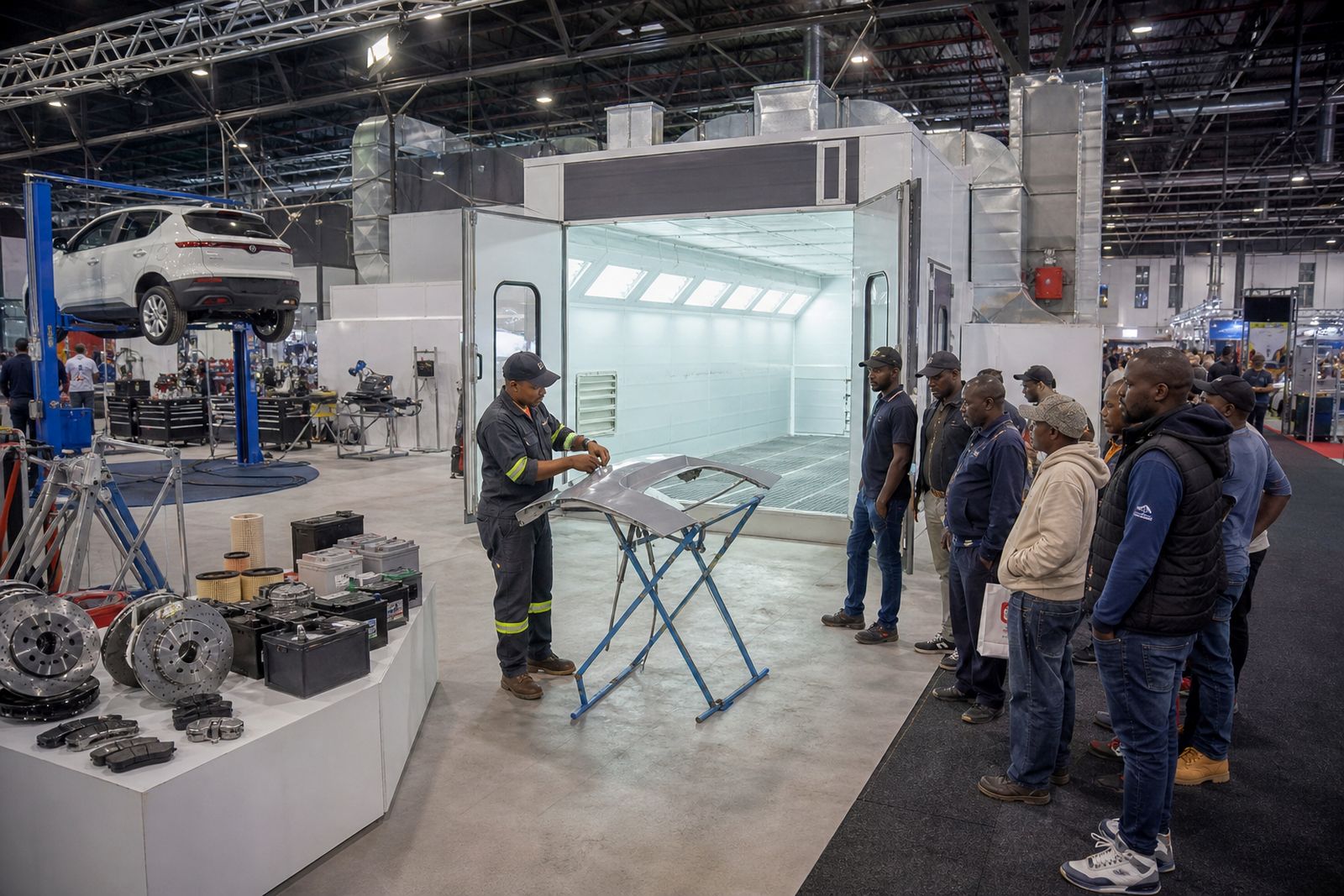
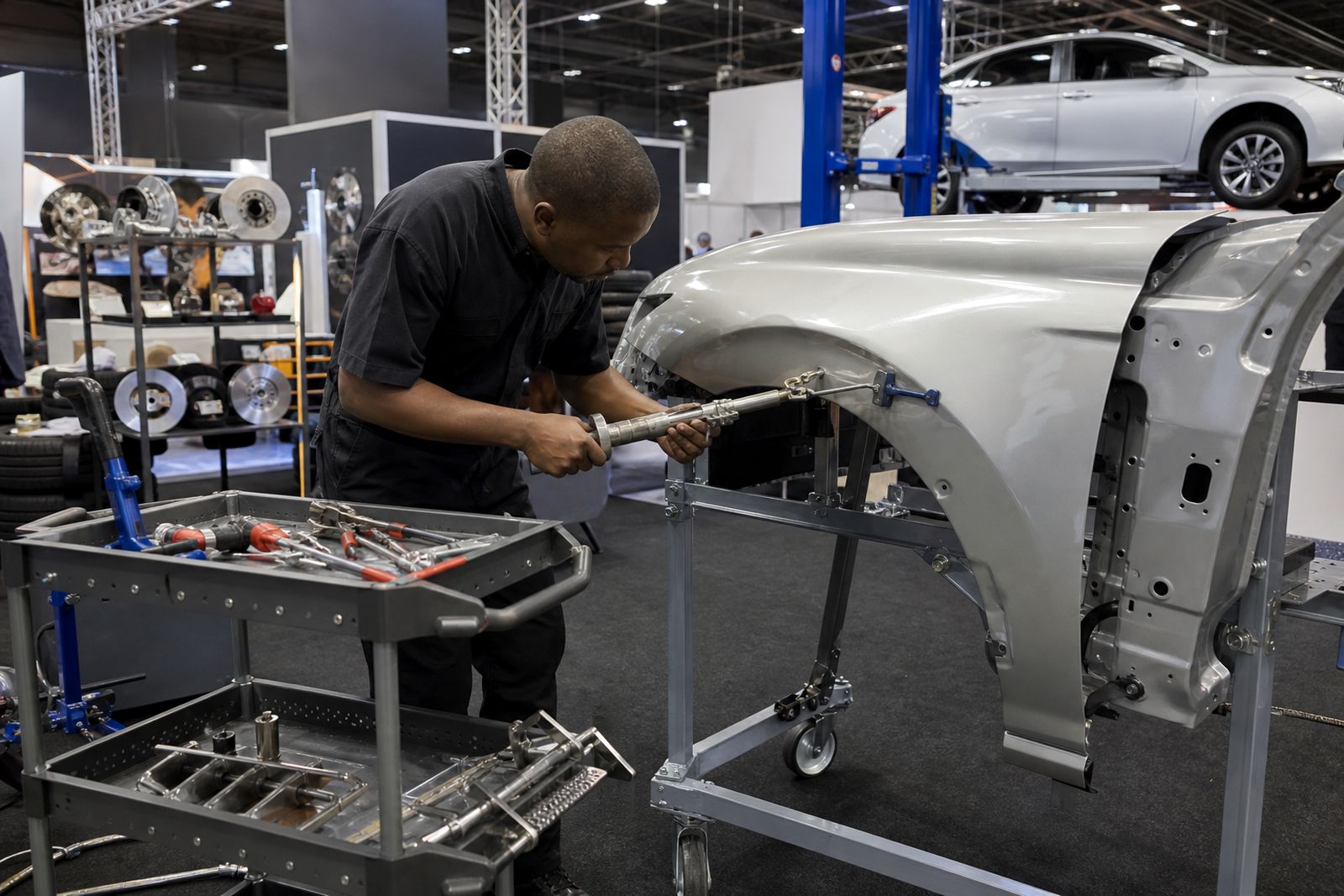
The Body shop hall brings together suppliers for panel-beating, repair equipment and spray application systems in one focused area. It helps workshop owners, buyers and fitment operators compare processes, layouts and support options before they place orders.
What you will find in the Body shop hall
This hall is aimed at the repair side of the automotive aftermarket, where buyers need to compare equipment that affects turnaround time, finish quality and workshop safety. Instead of walking between unrelated stands, visitors can move through one area that covers panel repair, preparation, spraying, extraction and related workshop equipment.
It is useful for independent workshops, larger fitment groups, parts distributors adding body repair lines, and buyers sourcing for towns beyond Johannesburg. Many visitors arrive with a shortlist but still need to check footprint, service access and power requirements before making a decision.
- Panel repair and straightening equipment
- Spray application and finishing systems
- Booth layouts, airflow and extraction options
- Preparation bays and sanding control equipment
- Workshop handling, storage and supporting accessories
Who should visit this hall
If your business handles collision repair, refinishing or insurance-related repair work, this section of the show will be one of your main stops. Buyers from across Southern Africa use it to compare equipment side by side instead of relying only on catalogues. That matters when floor area is tight or municipal site rules affect how a booth or extraction setup can be installed.
For smaller workshops, the main question is often how to improve output without taking up too much space. For larger operations, the focus is usually on throughput, consistent finish standards and keeping different repair stages moving without bottlenecks. A distributor may also visit to understand which product ranges match the needs of urban body shops versus workshops serving mining towns, farming areas or coastal centres where humidity can affect storage and finishing conditions.
How to compare spray and repair options
Not every workshop needs the same setup. Some visitors need a full enclosed spray solution, while others are looking for a preparation area or a repair station that fits into an existing building. Start with your daily job mix, average vehicle size and available power supply. During periods of power cuts, backup planning can also matter more than people expect.
- Space available: Measure length, width and clear height in metres, including vehicle access and operator movement.
- Type of work: Spot repairs, full resprays and commercial vehicle work all need different layouts.
- Airflow and extraction: Check dust control, filter access and where ducting can be routed.
- Power and utilities: Confirm supply requirements, compressor needs and backup arrangements.
- Service access: Ask how routine maintenance is handled and what can be reached without major downtime.
- Local conditions: Coastal humidity, winter cold and dust levels can affect operation and finish quality.
A useful way to compare stands is to ask each supplier the same short list of practical questions. That keeps the discussion grounded, and it helps procurement teams report back clearly after the show.
Choosing between compact, mid-size and higher-throughput setups
Buyers often come in knowing the process they want, but not the scale that suits them. The wrong size can create extra operating cost or leave a workshop short of capacity within a few months. Looking at three broad equipment tiers makes the choice easier.
- Compact setups: Best for smaller premises, selective repair work and businesses adding body repair to an existing workshop. Usually easier to place in built-up areas where access is limited.
- Mid-size setups: Suitable for workshops with steady daily repair flow that need a balance between floor space and throughput. Often the most practical option for regional operators.
- Higher-throughput setups: Better for businesses managing multiple vehicles at once, insurer-driven work or larger fleets. These buyers usually focus on operator flow, drying time and service support.
For many visitors the better choice is not the biggest one, it is the setup that matches staff numbers, building constraints and the type of vehicles handled most often. A supplier should be able to explain where a system starts to become underused or too small.
What to ask suppliers on the stand
The best stand conversations are specific. Bring your floor dimensions, photos of the workshop and a basic idea of your current throughput. If a supplier only speaks in general terms, push for installation detail, running requirements and after-sales support in Southern Africa.
- What building preparation is needed before installation?
- How much operator clearance is required around the equipment?
- Which parts need regular replacement and how are they supplied?
- What ventilation, filtration or extraction checks are required?
- Can the system be expanded later if the workshop grows?
- How is operator training handled after handover?
This is also the right place to ask about practical site issues such as dust control, drainage expectations and access for delivery vehicles. In Johannesburg and other busy centres, site logistics can delay a project if they are left too late.
Plan your route through the hall
If body repair and refinishing are a major part of your buying plan, visit this hall with a clear route. Start with the broad equipment categories you know you need, then move to the supporting systems that affect daily running costs and safety. That approach saves time and helps teams compare like with like.
Visitors often pair this hall with the live demonstration areas to see how a process works before they return to a stand for a detailed quote discussion. If you are still narrowing your options, the pages for spray booths and panel-beating and repair will help you focus on the right supplier category before you send an enquiry.
When you are ready to speak to the organisers, use the enquiry form on our contact page and tell us which type of supplier or solution you want to prioritise.
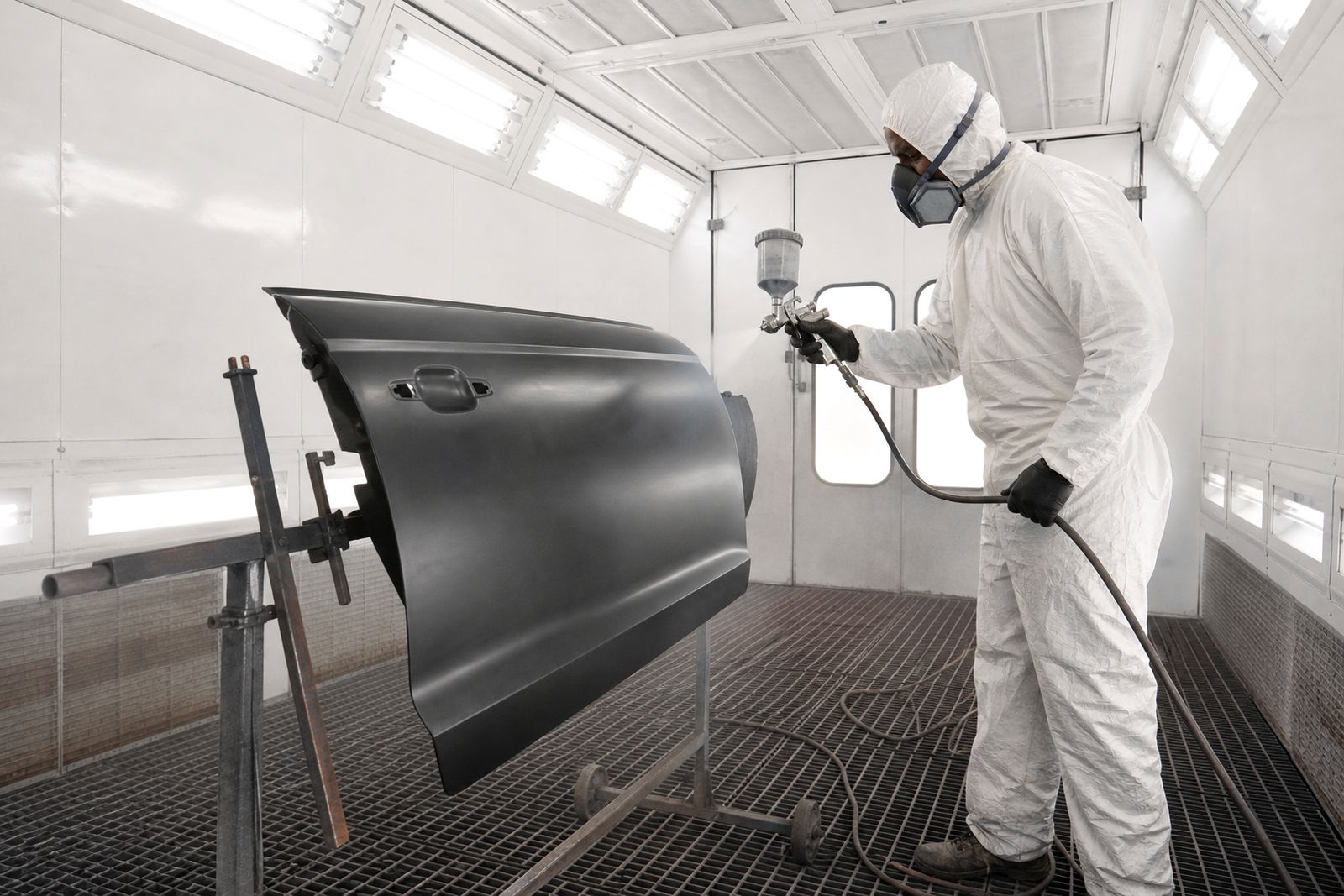
What our Aftermarket Trade Show customers say
Verified Google reviews
Questions we get asked
Is the Body shop hall only for large panel shops?
No. The hall is useful for smaller repair workshops, growing fitment businesses and larger body repair operations. Visitors can compare compact setups, mid-size options and higher-throughput systems in one place.
Can parts distributors use this hall to find new product lines?
Yes. Distributors visit to assess equipment categories, support requirements and suitability for different markets across Southern Africa, including urban workshops and regional repair centres.
How should I prepare before visiting the hall?
Bring your workshop dimensions, photos of the available space, your expected job mix and any limits around power, extraction or access. That makes stand discussions faster and far more useful.
Book a stand or register to visit
Send a note through our contact form saying whether you supply parts or equipment, or run a workshop, distributor or fitment centre, and our team will reply with the next steps.
Open the contact form