

Parts supplier stands
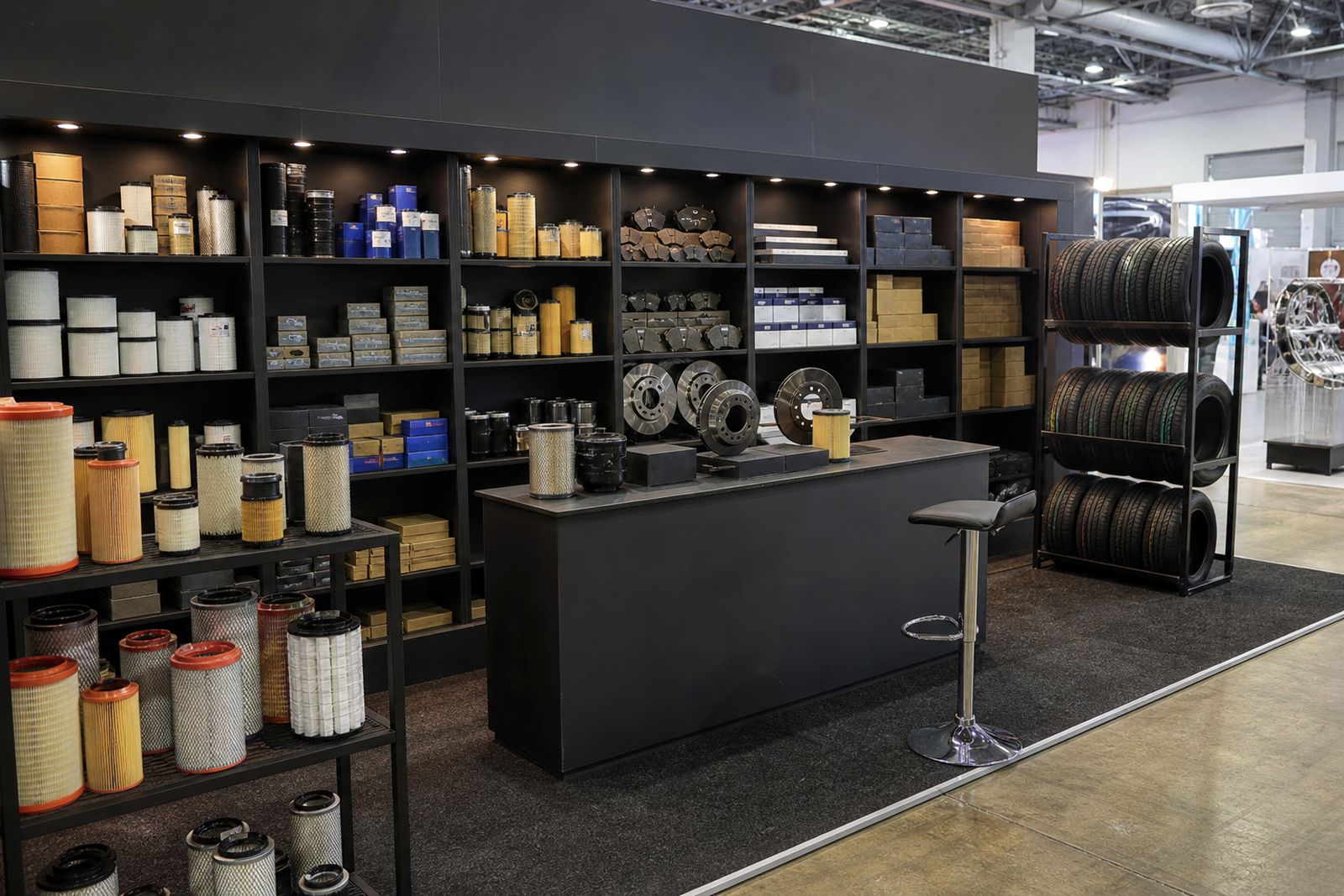
Show your parts range in a stand layout that makes buying easier for distributors, workshops and fitment centres. We organise practical stand options with shelving, counters and clear display space suited to automotive aftermarket products.
What is included in a parts supplier stand
Our parts supplier stands are planned for exhibitors showing packaged automotive parts to trade buyers. The aim is simple: make it easy for a distributor, workshop buyer or fitment centre operator to read the range, compare sizes and ask the right questions without crowding the aisle. We work around shelving runs, front counters, lockable storage and open product display areas so your team can speak to visitors while the stock presentation stays tidy.
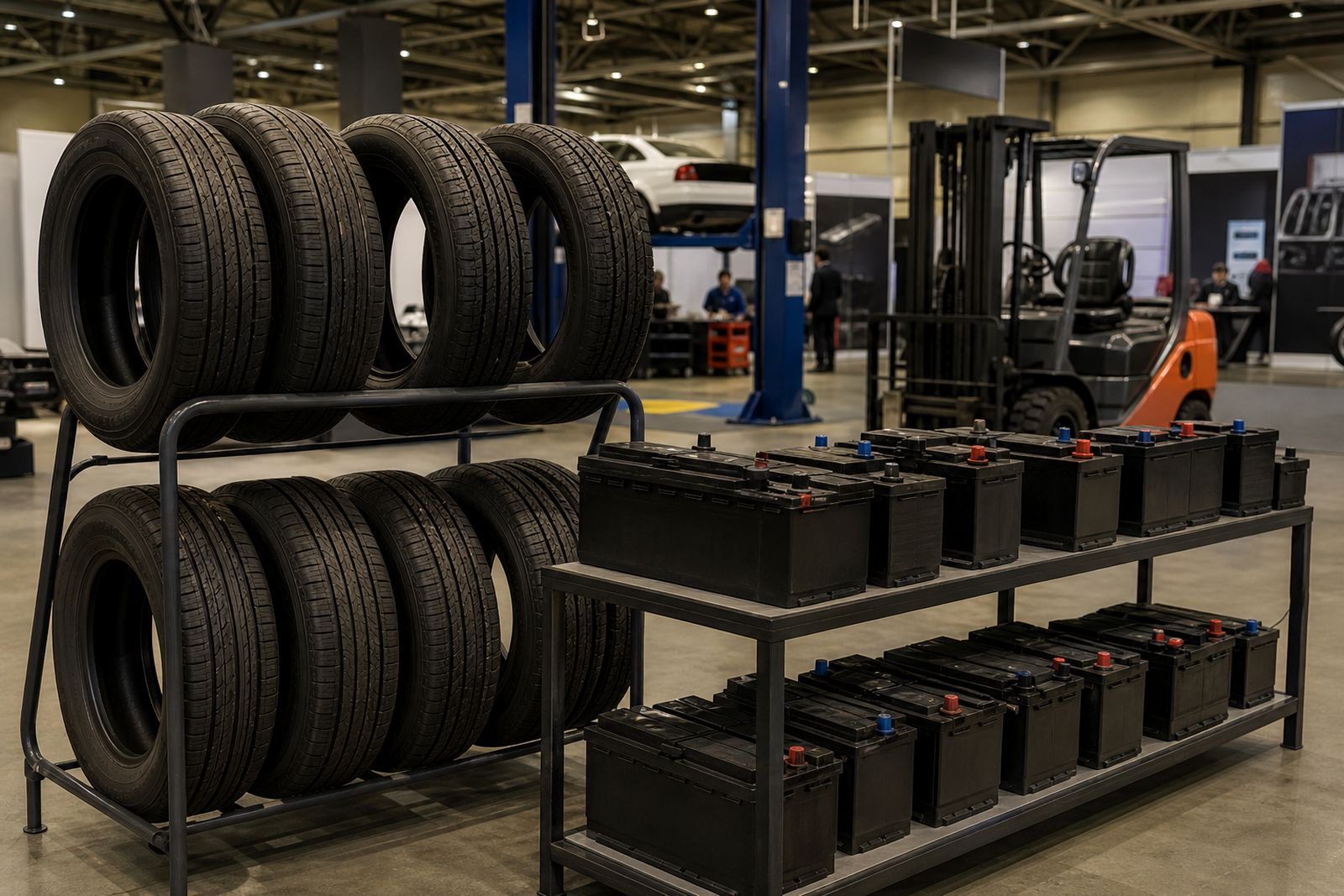
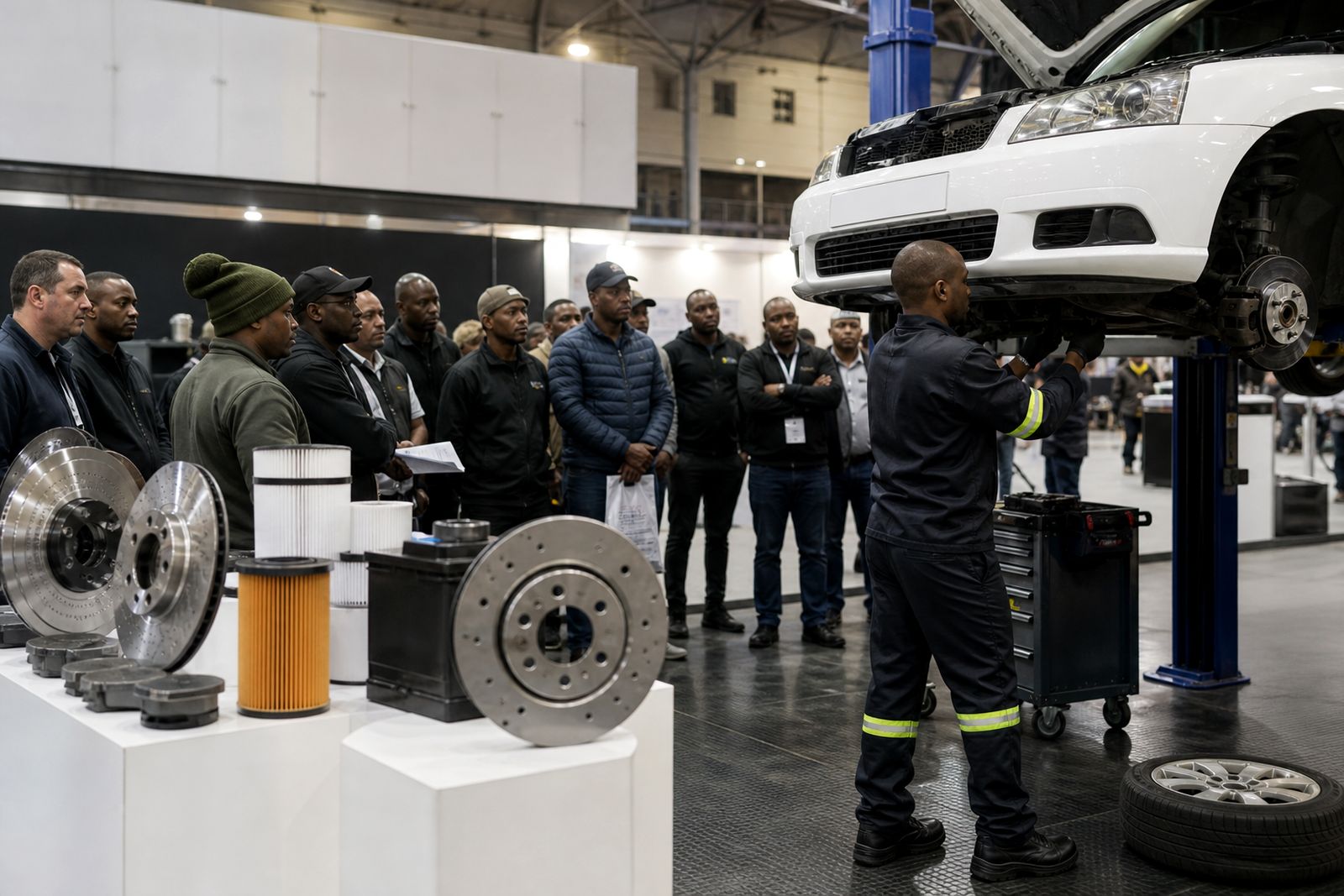
Stands in this section of the show are suited to brake components, filters, service items, electrical consumables, workshop essentials and other boxed or hung product lines. Where needed, we also allow for sample racks, brochure points and a small demo position for fitment discussion, provided it does not create noise or block neighbouring stands. If you have heavy sample items, tell us early so the floor loading and handling route can be checked.
- Shelving runs for boxed, carded or bottled parts
- Front counter space for order discussions and lead capture
- Back-of-stand storage for cartons, literature and staff bags
- Open wall sections for graphics, category signs and feature boards
- Power points for screens, barcode tools or small display equipment
- Aisle-facing layout planned for steady trade traffic
Stand formats and practical display specs
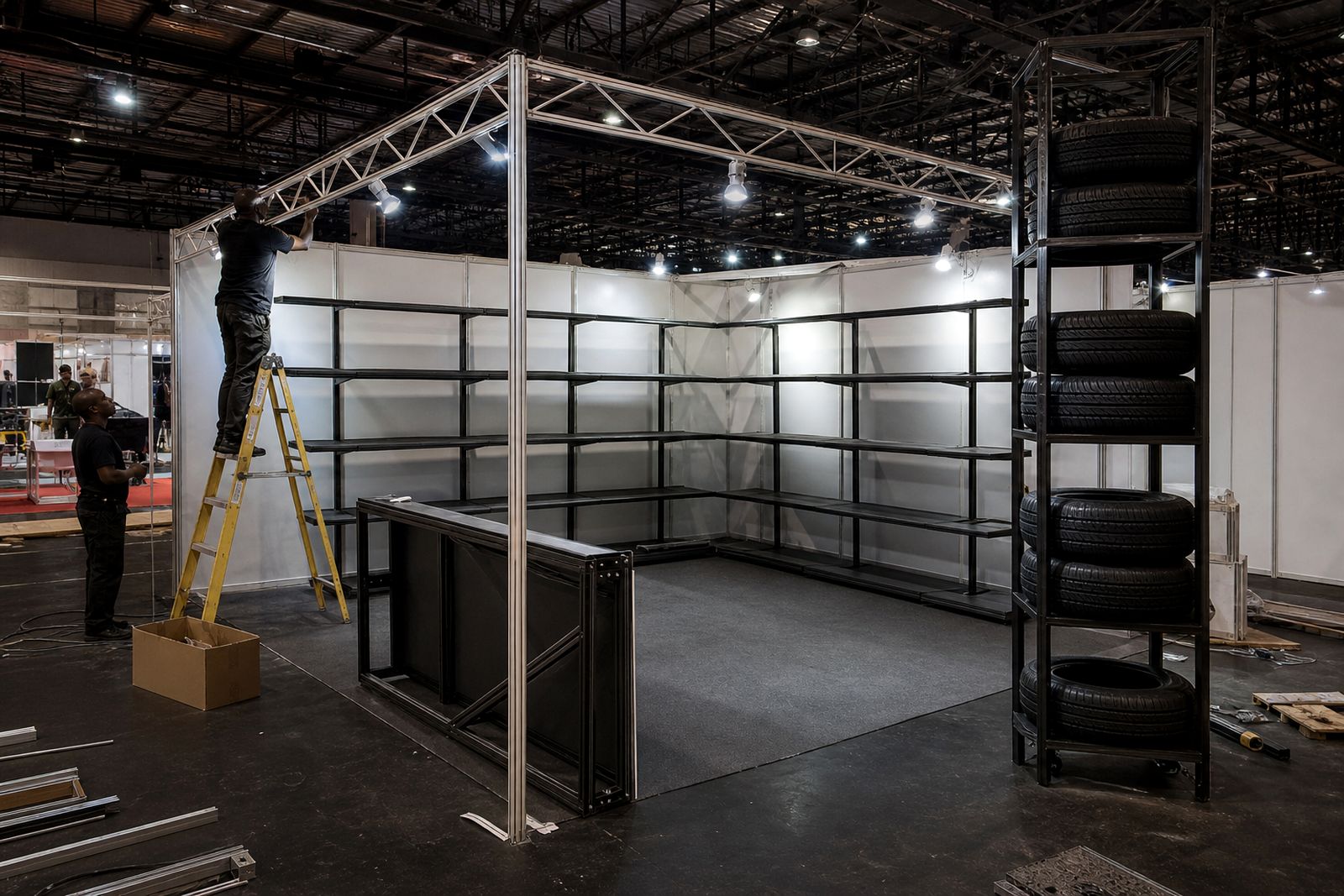
Most exhibitors choose a compact footprint that keeps the range focused and readable. Shelving is usually arranged along one, two or three perimeter walls depending on the stand shape and how much face-out product you need. Front counters are positioned to create a clean greeting point while still leaving enough room for two or three buyer conversations at once. In Johannesburg, setup access and move-in timing matter, so compact modular layouts are often easier to stock and reset during the build period.
For parts products, display depth matters just as much as wall length. Deep shelves can swallow smaller items, while shallow shelves can cause overhang on larger boxes. We help you match the stand fit-out to your range so the display looks full without becoming cluttered, which buyers notice quickly.
- Typical shelf depth: 300 mm to 450 mm
- Typical counter height: about 1 000 mm
- Common wall bay widths: 1 m and 2 m modules
- Practical clear aisle inside stand: about 900 mm to 1.2 m
- Display height planning to keep main lines at eye level
- Lockable store area where stand size allows
How the booking and planning process works
Once you enquire through our contact page, we discuss your product categories, expected team size and the way you want buyers to move through the stand. From there, we recommend a stand size and a layout approach that suits your range. Exhibitors showing a broad catalogue often need category zoning, while a specialist line may work better with fewer shelves and a stronger consultation counter.
After the stand position is confirmed, we move into fit-out planning. This includes the quantity of shelving, whether you need storage, power requirements and any live demonstration element allowed for that section. We also check handling needs for heavy cartons or large sample pieces. Closer to move-in, you receive the practical information needed for arrival, unloading and restocking. It is all straightforward but timing is important.
- Step 1: enquiry and discussion of your range
- Step 2: stand size recommendation and placement options
- Step 3: fit-out planning for shelves, counters, power and storage
- Step 4: submission of your stand details and operational needs
- Step 5: move-in guidance, build access and on-site coordination
- Step 6: show opening support and post-show breakdown guidance
What you need to prepare before move-in
The better prepared your team is, the better the stand works on day one. You should arrive with a clear product grouping plan, enough sample stock to keep shelves presentable, and labels that can be read quickly by busy trade visitors. If your range includes many near-identical part numbers, think about how buyers will compare them. Category boards, application charts and simple fitment notes help a lot.
Your packing method also affects setup time. Loose mixed cartons slow things down, while shelf-ready cartons and a bay-by-bay packing list make stocking much easier. Bring basic cleaning cloths for packaging dust, and plan for secure storage of extra literature and personal items. Small details matter here and rushed stands tend to show it.
- Product list grouped by category or application
- Price and ordering policy for your own team to follow
- Sample stock packed by shelf bay or display zone
- Labels, part cards and application guides
- Any small tools needed for approved display setup
- Staff roster for setup, show days and breakdown
How pricing is worked out
Pricing is based on the stand size, its position within the hall and the amount of fit-out required. A simple shell arrangement with limited shelving will cost less than a heavily fitted stand with multiple counters, storage and extra power points. If you need reinforced handling for heavy samples, more labour for setup, or additional operational services, those items are usually priced separately.
We also look at how much wall area you need for the range to be shown properly. Some exhibitors try to place too many categories into a small footprint, which often leads to wasted spend because buyers cannot read the display. A well-planned medium stand can work better than a crowded larger one. Final figures depend on the practical scope requested through the enquiry process.
Because each exhibitor's stock profile differs, we do not use one flat rate for all parts stands. Shelf count, counter length, storage provision, power access and any approved demo space all affect the total. That way you pay for what the stand actually needs, not for extras that sit unused.
Support during the show and aftercare
During the show, our team coordinates hall operations and helps with practical exhibitor matters linked to your stand area. If there is an issue with access, power supplied to your stand package, or general hall procedure, the on-site team will direct you to the right support point. We cannot run your stand for you, but we do help keep the exhibition side organised so your team can focus on buyers.
After the show, breakdown guidance is provided for stock removal and collection timing. If you are reviewing the value of your participation, use your lead notes, category interest and buyer questions to decide what to expand next time. Many exhibitors learn that one product family needs more shelf space while another can be reduced. That kind of practical review usually leads to a better stand at the next show, and fewer wasted cartons too.
What our Aftermarket Trade Show customers say
Verified Google reviews
Questions we get asked
Can we display a wide product range on one stand?
Yes, if the stand is sized correctly and the categories are grouped properly. Too many lines in a small space can make the display hard to read, so we usually recommend zoning by product family.
Are live product demonstrations allowed on parts supplier stands?
In some cases, yes. Small practical demonstrations may be allowed if they suit the hall rules, do not create excessive noise and do not obstruct neighbouring stands or aisle flow.
Do we need to bring our own shelves and counters?
Stand requirements are discussed during planning. Many exhibitors choose a fitted option with shelves and counters included, while others add selected extras based on the range they want to show.
Also worth a look
Book a stand or register to visit
Send a note through our contact form saying whether you supply parts or equipment, or run a workshop, distributor or fitment centre, and our team will reply with the next steps.
Open the contact form