

Tyre and battery zones
The tyre and battery zones are planned for exhibitors bringing heavy products, display racks and practical fitment equipment. We help suppliers set up space that handles stock weight, buyer flow and live product conversations without wasting metres.
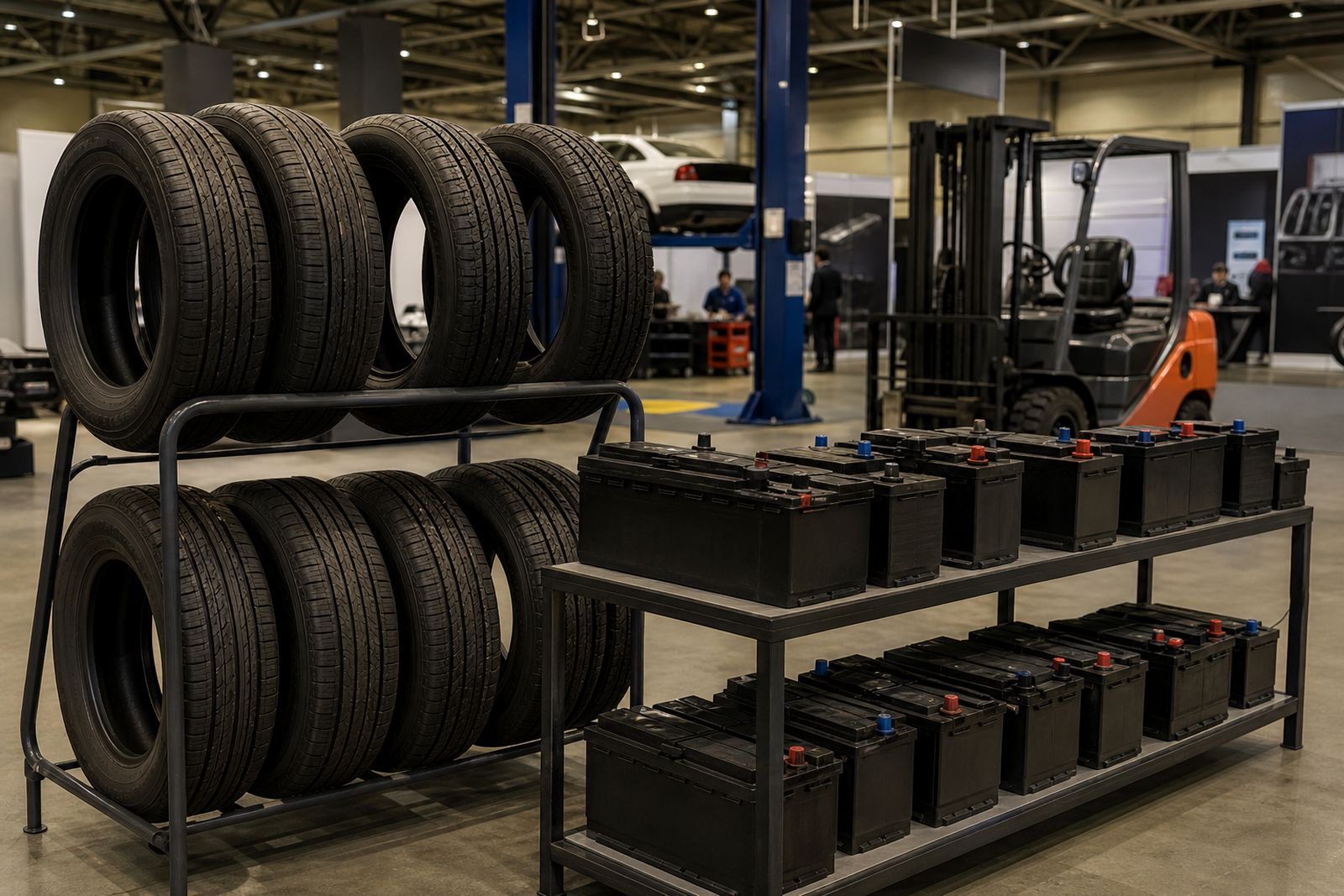
Built for heavy stock and busy buyer traffic
Tyres, wheels, battery units, charging equipment and workshop accessories need a different stand layout from lighter product categories. In these zones, floor space is allocated with product weight, trolley movement, pallet drop points and safe visitor circulation in mind. The aim is simple: buyers must be able to inspect products properly, compare ranges and speak to your team without congestion around stacked stock or display frames.
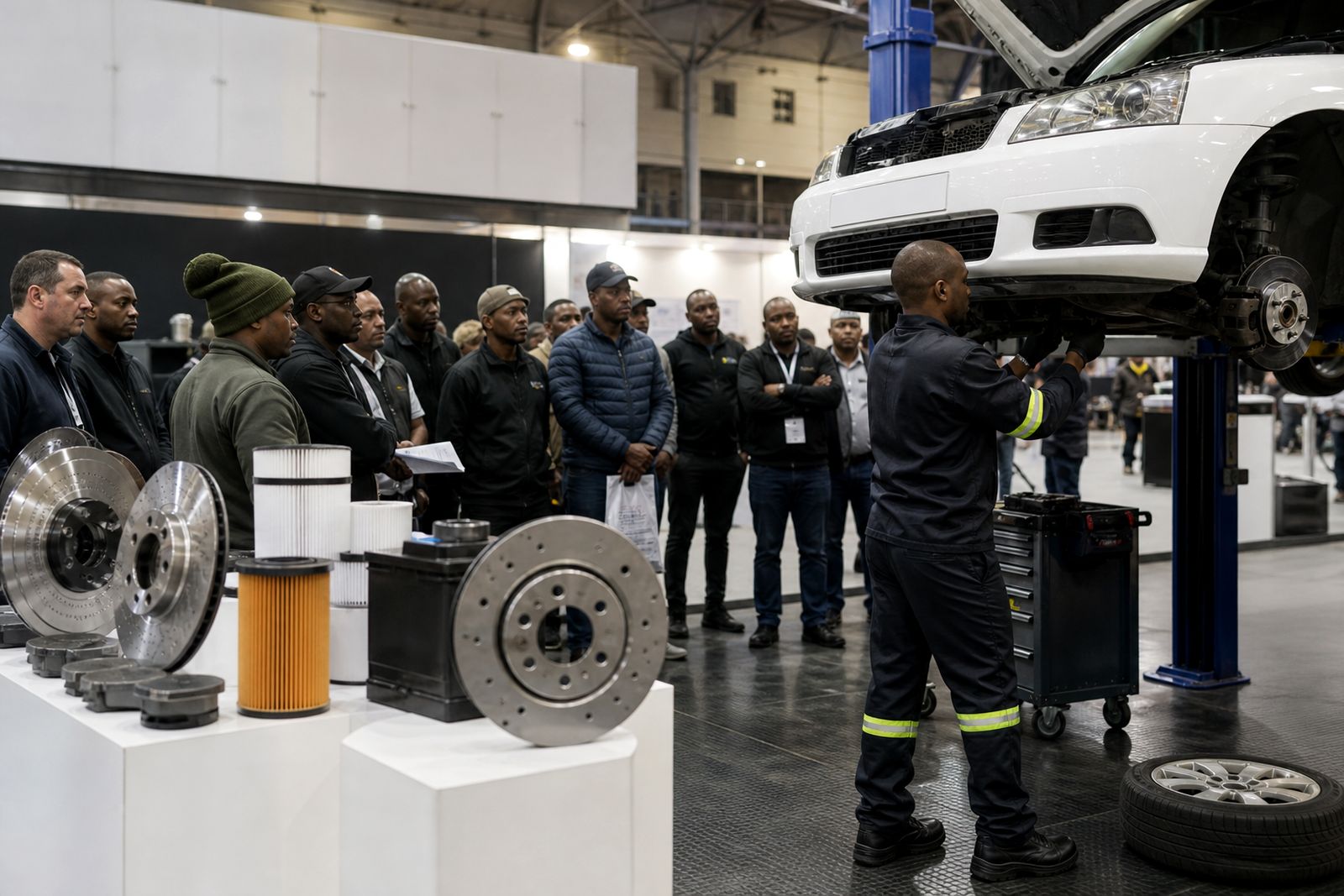
This area suits parts suppliers that want to show casing sizes, tread patterns, fitment tools, charging systems, testing equipment and related workshop items. It also works for suppliers who need room for back-of-stand stock holding during the show. Where a live demonstration is planned, we look at queue space and operator working clearance so the stand stays usable through the day, even when foot traffic picks up a bit.
- Open frontage options for easy buyer access
- Space planning around product weight and stack height
- Allowance for trolley routes and stock replenishment
- Layout guidance for demo counters, test benches and consultation points
What is included in the tyre and battery zones
Your booking covers exhibition floor space within the relevant product zone, plus planning input from the organiser on positioning, access and operating requirements. We discuss whether you need a product display stand, storage section, demo area or a more sales-led meeting layout. If your stand includes battery testers, charging units or tyre handling equipment, we note the service needs early so there are fewer surprises during build-up.
We also help exhibitors understand the hall operating rules that matter for this category, including power supply requests, fire lane clearance, waste removal points and handling arrangements for heavy deliveries. Suppliers bringing batteries or fluids must package and manage these items correctly and keep to hall safety rules. It is practical work, not fancy paperwork, and it makes move-in easier.
- Zone placement suited to tyre and battery product categories
- Pre-show planning on stand footprint and product handling
- Guidance on service requirements such as power and access
- Coordination notes for delivery timing and move-in procedures
- Operating guidance for demos, storage and daily replenishment
How the process works step by step
First, you send an enquiry through the contact page with a short outline of your product range and the kind of stand you need. We then discuss your objectives: meeting distributors, speaking to workshop owners, launching a new line, or running a practical demonstration. From there, we recommend a zone position and floor area based on your products and how much interaction you expect on the stand.
Next, you submit your stand requirements. That includes approximate product weights, display equipment, power needs, storage expectations and whether you plan any demonstrations. Once the space is confirmed, we issue the exhibitor information needed for planning your build-up, deliveries and staffing. Closer to the show, final stand details are checked so move-in can run in an orderly way.
During set-up, your team brings in products and stand materials according to the allocated access times. Heavy items should arrive packed for safe unloading and short-distance movement inside the hall. After opening, your team runs the stand and manages stock top-ups through the approved procedures. After the show, breakdown and removal follow the same controlled process, nothing complicated if prep was done properly.
What you need to prepare before arrival
Good preparation saves time on the floor. Tyre stacks, battery displays and workshop equipment can become awkward very quickly if dimensions and weights are not checked in advance. Before arrival, you should have a clear stand plan, a product list and a workable method for moving stock from the unloading point to the stand. If you are demonstrating testers or chargers, bring operating instructions and make sure your operator understands the power requirement and the safe use limits.
Packaging matters as well. Products should arrive labelled, protected from damage and grouped in the order they will be placed. If your team is coming from coastal areas such as Durban, Gqeberha or Cape Town, remember that humidity can affect packaging, printed material and exposed metal parts during transport, so wrap and crate accordingly.
- Stand plan with product positions and access gaps
- Dimensions and weight of key display items
- Power and equipment list for any active demonstrations
- Delivery schedule and handling method for heavy stock
- Staff brief on buyer engagement, demo safety and replenishment
- Waste plan for packaging, pallets and protective wrap
How pricing is worked out
Pricing is generally based on the floor area you book and the operational demands of the stand. A simple product display stand in the tyre or battery zone is costed differently from a larger footprint with storage, equipment connections and live demonstrations. Corner positions, wider frontages and stands needing more service coordination may affect the total as well.
Other cost factors can include special handling requirements, extra power demand, longer move-in needs and any stand features that change the standard operating plan. If your display relies on heavier racks, demonstration benches or grouped battery product walls, that is usually considered during planning rather than left to the last minute. We explain the cost basis clearly so you can budget for space, operations and any optional extras without guesswork.
Because every exhibitor uses the area differently, the most accurate approach is to tell us what you want the stand to do, not just how many square metres you think you need. That usually avoids booking too little space, or paying for metres you will not use.
Aftercare, support and operating notes
Support does not stop once your space is confirmed. Before the show, we remain available for practical questions about access, deliveries, service requests and zone rules. During the event, exhibitors in the tyre and battery sections can work through the organiser for operating issues that affect the stand, including replenishment timing, waste handling and demo queries.
After the show, we provide the close-out information needed for breakdown and collection. Suppliers should remove stock, hired equipment and branded materials within the allowed breakdown window and leave the space clear. Any batteries, damaged units or technical consumables must be handled in line with applicable hall and safety requirements. If you plan to return with a larger presence next time, the best step is to review what worked on buyer flow, storage and operator space while it is still fresh in the team’s mind, small lessons help a lot.
What our Aftermarket Trade Show customers say
Verified Google reviews
Questions we get asked
Can we bring heavy stock for display in this zone?
Yes. This zone is intended for exhibitors with heavier products, but you must declare key item weights, packaging method and handling needs in advance so the space can be planned correctly.
Are live battery or diagnostic demonstrations allowed?
They can be, provided the equipment and operating method are approved during planning and the demo fits the hall safety and power rules.
How much stand space do we need?
That depends on your product range, storage requirement and whether you are displaying only or also running demos. We recommend space according to function, not just square metres.
Also worth a look
Book a stand or register to visit
Send a note through our contact form saying whether you supply parts or equipment, or run a workshop, distributor or fitment centre, and our team will reply with the next steps.
Open the contact form