Running a live demo on your stand
A live demo can turn a passing buyer into a serious conversation if it is easy to follow and safe to watch. The best ones are short, well rehearsed and set up so workshop owners, fitment centres and distributors can see the point within a minute.
Start with one job and one clear outcome
Most show visitors are moving between aisles with limited time, so your demo needs a single purpose. Choose one job that matters to your audience, such as a brake service check, a battery test, a wheel balancing step, a filter change process or a paint prep technique in the body shop hall. If you try to show too much at once, people lose the thread and your operator ends up talking over the action.
Build the demo around one clear outcome. That could be faster fault finding, cleaner fitment, less rework, better finish quality or easier stock selection for a distributor. Say that outcome early, then repeat it during the key step. Buyers from Johannesburg and across Southern Africa often decide in the first few moments whether to stop or keep walking, so make the opening line plain and practical.
- Pick one product group or one workshop task only.
- State the problem first, then show the fix.
- Keep the full demo between 5 and 8 minutes.
- Plan a shorter 2 minute version for busy periods.
- End with a direct invitation for questions at the stand.
Set your stand for visibility and safe movement
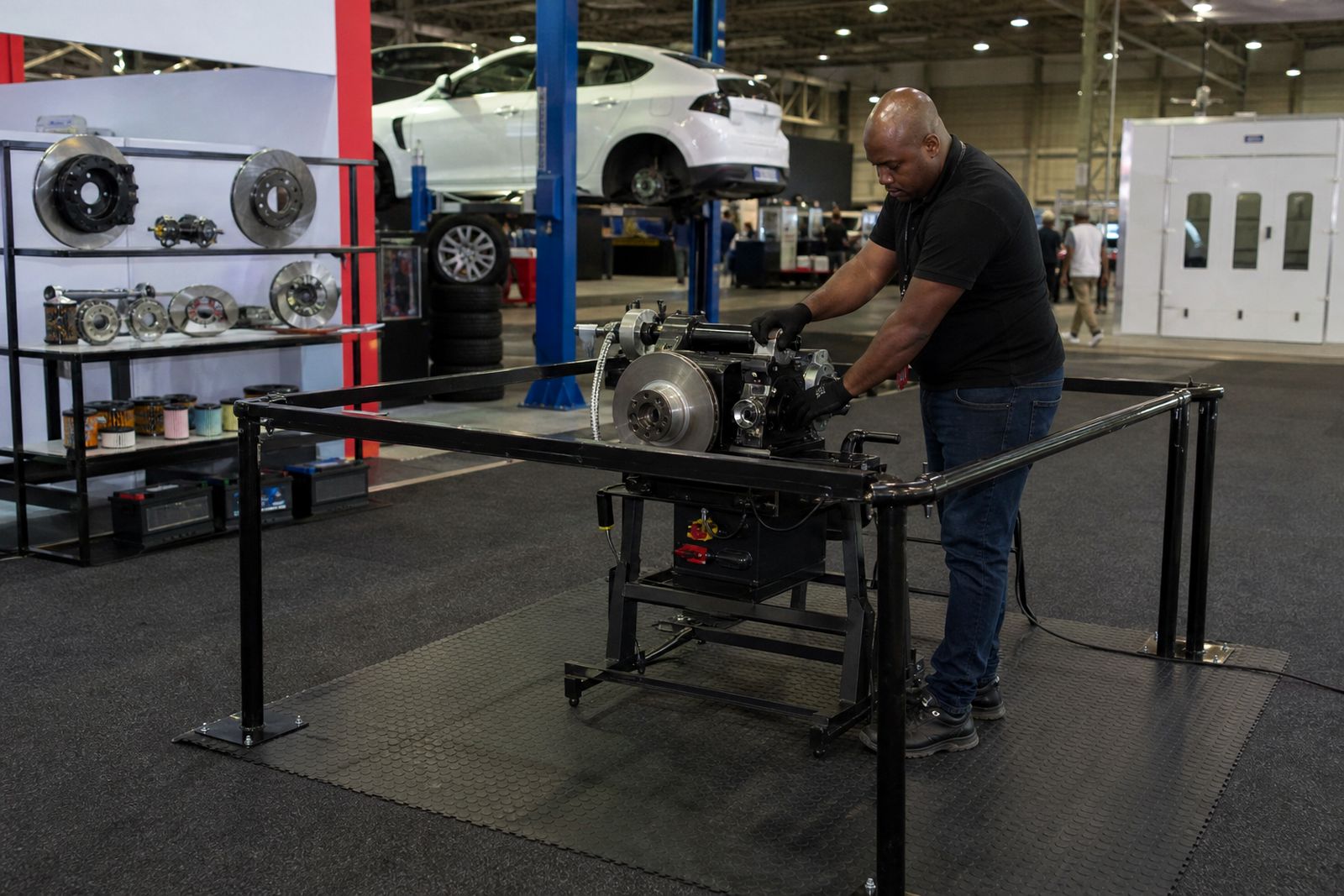
A good live demo stand works like a small workshop bay. Visitors must be able to see the action without blocking the aisle, and your team must be able to move safely around tools, stock and cables. Raise important items to viewing height where possible and place the main action near the front corner of the stand, not hidden at the back behind counters or shelves.
Leave enough room for a half circle of viewers and keep a clear entry point for buyers who want to step in after the demo. If you are using power, compressed air, test benches or spray equipment in an approved area, check all supply points and routing before the hall opens. Power cuts can happen anywhere, so it helps to know exactly which parts of the demo can continue manually and which parts need a restart.
- Mark a working zone for the operator and keep it clear.
- Route extension leads and hoses away from walking lines.
- Store spare parts, consumables and cleaning cloths out of sight.
- Place signs at eye level with the demo topic and next start time.
- Keep a waste bin and spill kit close by if fluids or dust are involved.
Keep safety visible, not hidden
Visitors trust exhibitors who take safety seriously. That matters even more when you are demonstrating workshop equipment, electrical testing, wheel and tyre work, body repair methods or paint preparation. Do not treat safety as something you mention only if asked. Build it into the script so buyers can see that your process is realistic for a working shop.
Use the right protective items for the task and explain why they are needed. If a machine guard, extraction point or isolation step is part of correct use, show it every time. In a crowded hall people sometimes arrive halfway through, so repeat any warnings before the critical step. Keep your operator focused on the job and have a second team member manage questions from the side, otherwise the presenter starts turning away from the work area and small mistakes creep in.
- Wear the correct eye, hand and hearing protection for the task.
- Use barriers or floor marking if moving parts are exposed.
- Never start a demo until the viewing area is clear.
- Stop immediately if a spill, trip hazard or smoke issue appears.
- Have a simple shutdown plan and make sure the whole team knows it.
Script the talking points and rehearse the timing
The strongest demos are not improvised. Write a simple running order with an opening line, three key points and a closing line. That is enough structure to keep the demo moving while still sounding natural. Your operator should know exactly when to pause, when to hold up a part for visibility and when to invite the crowd closer.
Use plain trade language. Workshop owners want to know how this fits into a real bay. Fitment centres want speed, repeatability and fewer comebacks. Distributors want to understand range logic, pack sizes and which products create good follow-on sales. Shape your words around those needs rather than reading from a spec sheet. If noise levels rise in the hall, shorten the explanation and let the action do more of the work.
Rehearse with a timer until the full run is consistent. A demo that drifts from 6 minutes to 12 minutes loses people and causes bunching in the aisle. Also rehearse the reset between sessions, because that is where teams often look disorganised or run out of consumables a bit too quickly.
Use the crowd well and qualify the right visitors
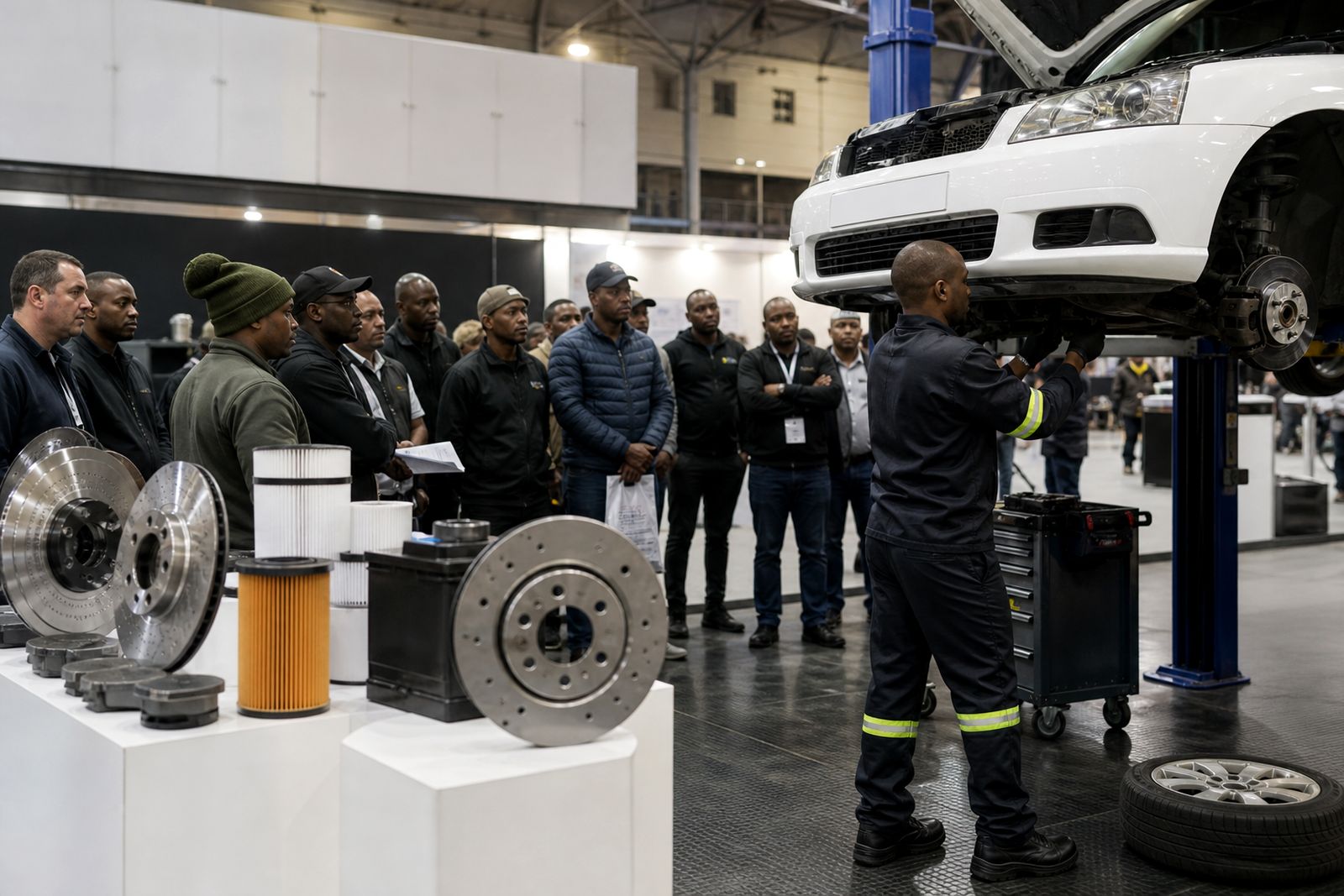
A crowd helps, but only if it stays manageable and leads to useful conversations afterwards. Start with a clear callout a minute or two before each run, then gather people into a viewing line that keeps the aisle open. Your second team member should stand just outside the crowd to greet late arrivals and identify whether they are a workshop buyer, a fitment centre operator, a distributor or a body repair specialist.
Do not try to answer every detailed question during the main demonstration. Park technical queries for the end unless they help the whole group. This keeps the pace up and gives your team a chance to speak one to one with serious buyers after the demo finishes. A short note sheet can help your staff track which visitor wants pricing packs, technical sheets, training information or a follow up meeting through the contact page.
- Announce the next demo time clearly.
- Ask quick qualifying questions after the demo, not during it.
- Keep brochures or spec sheets ready at the edge of the stand.
- Record the visitor's interest by product category.
- Thank people who watched, even if they are not ready to buy now.
Checklists for the morning, each session and close-down
A simple checklist prevents last minute scrambles and makes your stand look professional from the first session to the last. Print it and keep a copy with the operator and the stand lead. This is especially useful for demos involving fasteners, batteries, brake components, filters, tools, body repair materials or paint prep items where small missing pieces can stop the whole sequence.
Before the hall opens: confirm power and lighting, test equipment, lay out consumables, wipe surfaces, place PPE, check signage, and brief the team on timings and handover roles.
Before each demo: reset the work area, remove waste, confirm parts are ready in order, check the viewing zone, and make sure the presenter has water and notes close by.
After each demo: isolate equipment if needed, clean the area, restock used items, record serious enquiries, and review any safety issue while it is still fresh. A tidy reset takes only a few minutes but it changes how buyers judge your stand.
At close-down: secure valuables, dispose of waste correctly, cover sensitive equipment, and note any faults to fix before the next morning. If your demo uses products affected by heat or coastal humidity during transport, store them according to the supplier guidance so performance stays consistent on the next run.
What our Aftermarket Trade Show customers say
Verified Google reviews
Questions we get asked
How long should a live demo be?
For most stands, 5 to 8 minutes works well. It is long enough to show a real task but short enough to hold a crowd and repeat often through the day.
Should we run a demo every hour?
Set a rhythm your team can sustain without rushing the reset. Fewer well run sessions are better than constant demos that leave the stand cluttered and the operator tired.
What if our demo needs power or compressed air?
Check requirements with the event team before the show and test everything before visitors arrive. Also plan a backup explanation for any step that cannot run during a temporary power interruption.
Also worth a look
Book a stand or register to visit
Send a note through our contact form saying whether you supply parts or equipment, or run a workshop, distributor or fitment centre, and our team will reply with the next steps.
Open the contact form