Brake and suspension demos
Our brake and suspension demos show pads, discs, shocks and related components fitted live in front of trade visitors. They are planned for workshops, fitment centres and parts buyers who want to compare product ranges in practical working conditions.
What the demo includes
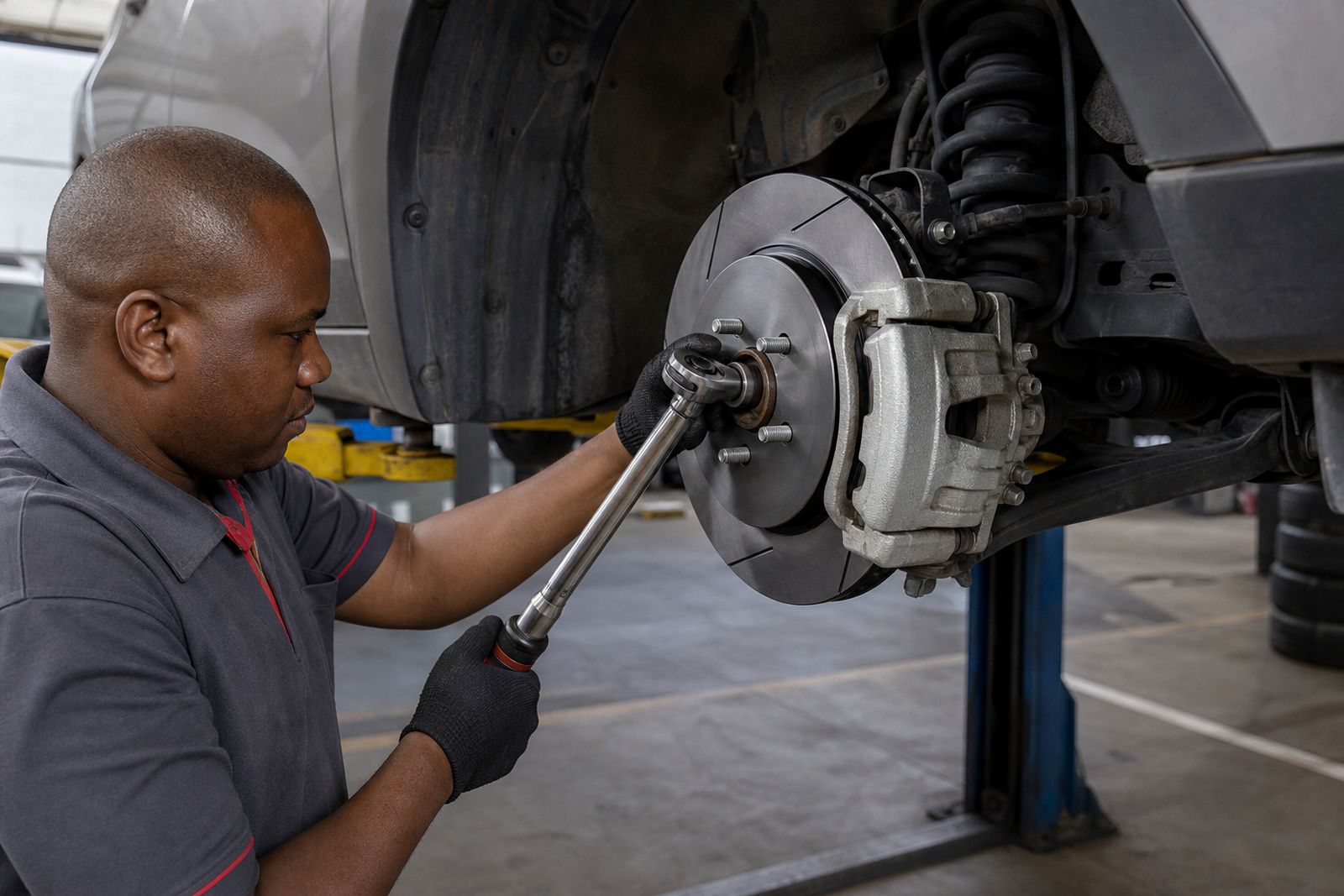
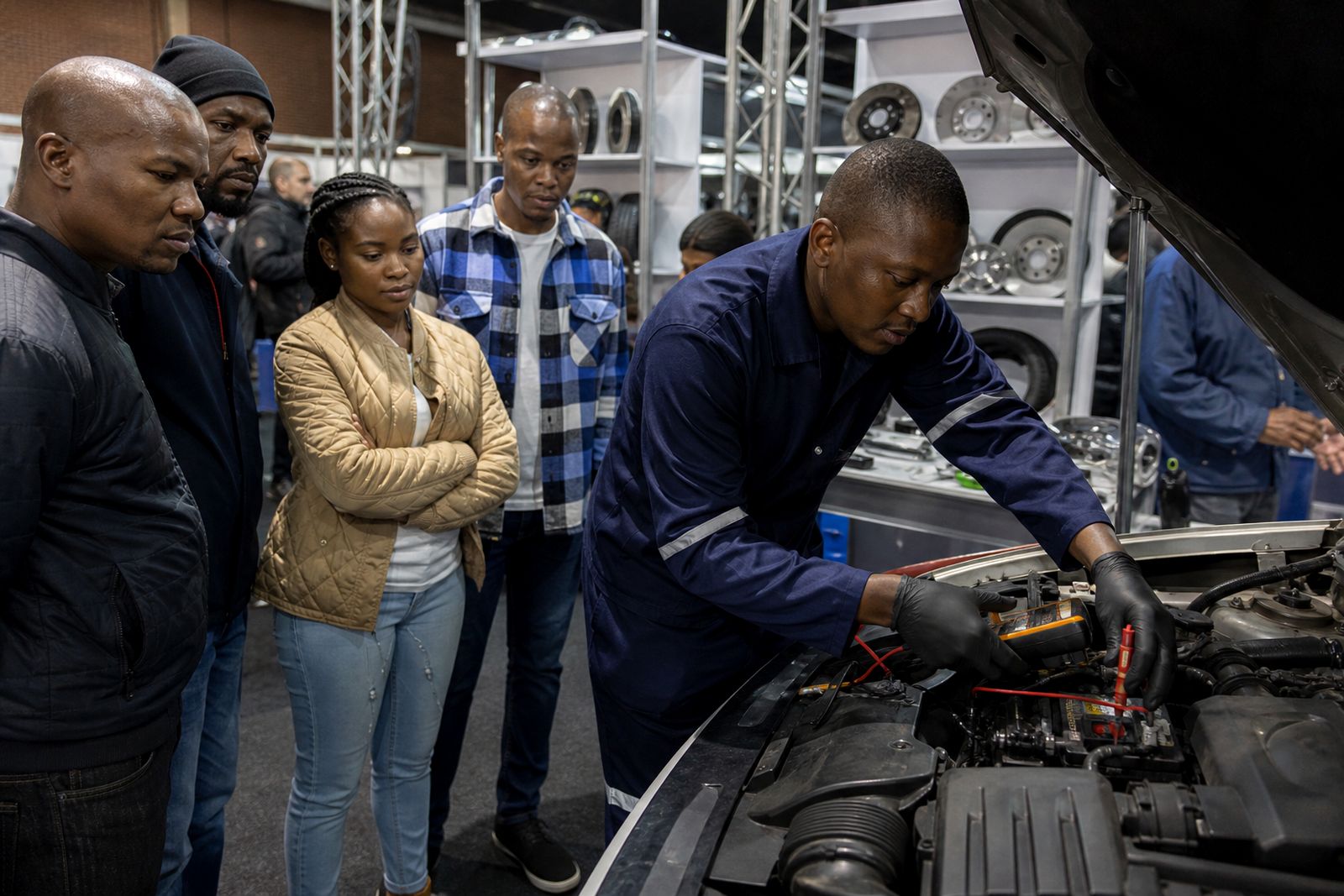
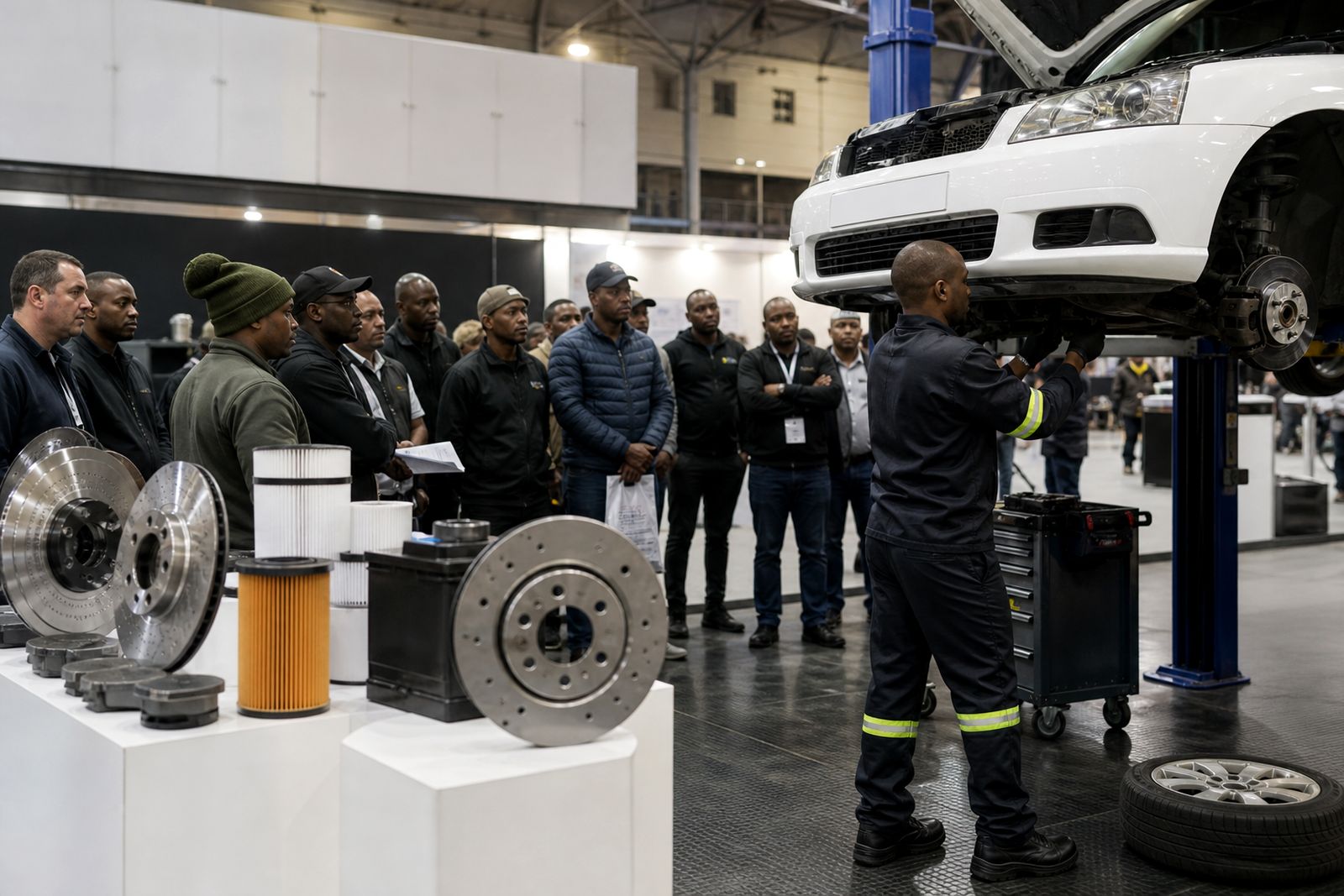
This live demo format is built for automotive aftermarket suppliers who need more than a static stand. Visitors can watch core brake and suspension parts being handled, checked and fitted in a controlled demo area, with the operator explaining fitment points, tool access, common workshop issues and the differences between product options.
The session is suited to pad and disc ranges, brake hardware, hydraulic service items, shocks, struts, mounts and related undercar components. The aim is to show realistic workshop procedure rather than a sales talk, so buyers can judge whether a range suits daily use in independent workshops and fitment centres across Southern Africa.
- Live fitting of pads, discs, shocks or related items on a prepared display vehicle or training assembly
- Presenter support from your own technical team
- Basic crowd control and timed demo slots
- Power access and standard floor space for tools and display items
- PA support where required for clear explanation during busier periods
How the demo runs on the day
Before the hall opens, the organiser confirms the slot times, access route, tool position and parts layout. Your team brings the prepared components, consumables and any teaching boards or cutaway samples. The operator then checks that all moving parts, lifting points and hand tools are set out safely and that the demonstration can run inside the agreed time.
During the session, the presenter introduces the application, explains what is being removed or fitted and works through the procedure step by step. Visitors usually want to see mounting detail, wear indicators, friction material thickness, disc finish, fastener access and how long a typical job takes. A good demo keeps this practical, clear and fairly brisk. Questions are taken at the end or between stages so the flow isnt broken too much.
After each run, the area is reset for the next group. Used packaging, removed parts and oily wipes must be cleared quickly, because a neat demo space attracts better attention and helps with safety.
Step by step preparation
Good brake and suspension demos depend on preparation. If the parts supplier arrives with the right vehicle, right tools and a simple running order, the audience follows the demo far more easily. We advise exhibitors to keep one main message per session, such as fast pad replacement, shock comparison, brake noise reduction or inspection points on worn suspension items.
- Choose the exact parts to be demonstrated and confirm the vehicle or training rig application
- Prepare a written sequence for removal, inspection and refit
- Bring duplicate consumables where needed, including clips, grease, cleaner and fasteners where applicable
- Label display parts clearly so buyers can identify the range after the session
- Plan a short question period and a handover back to the stand team
If you are demonstrating brake work, make sure the parts are matched properly before arrival. If you are showing shocks or struts, decide in advance whether you are comparing old versus new units, left versus right construction or standard versus heavy duty use. A little prep saves a lot of time later, and it stops a session becoming a parts hunt in front of visitors.
What exhibitors must bring
The show provides the agreed demo area and standard services, but the exhibitor remains responsible for the demonstration vehicle, training hub, parts and tools needed for the procedure. You should also bring enough stock for repeated sessions if multiple demo slots are booked over the course of the show.
- Demonstration vehicle, axle assembly or training stand in safe working condition
- All pads, discs, shocks, struts, mounts and fitting kits required for each session
- Hand tools, torque tools and any specialist service tools
- Cleaning materials, drip trays and waste containers where needed
- PPE for your team, including gloves, eye protection and suitable footwear
- Printed application charts or simple technical sheets for buyers to take away
Because many buyers travel in from across the region, they value straightforward information. Keep part numbering, fitment notes and usage recommendations easy to read. If your products are aimed at heavy urban stop-start work in Johannesburg, or longer regional routes, say so plainly.
How pricing is worked out
Pricing for a brake and suspension live demo is normally based on the amount of floor space, the number of sessions, the service level needed and any added requirements for power, storage or traffic control. A simple demonstration on a static training rig will cost differently to a larger working setup with repeated fitting sessions and support equipment.
Where an exhibitor needs extra handling time, earlier move-in, more storage room or additional operational support around the live area, those items are usually costed separately. If your stand and demo need to work together closely, we can also plan the visitor flow so buyers watch the session then move directly to your stand for product discussion and application detail.
For budgeting, it helps to finalise your demo scope early. Last minute changes to tools, vehicle type or floor layout can affect the final figure a bit, especially where access or extra safety controls are needed.
Aftercare and follow-up after the session
Once the demo ends, the immediate job is to make the area safe and tidy. Removed parts, fluid containers, packaging and used consumables must be cleared and stored correctly. If the same vehicle or assembly is being used again, the team should inspect it before the next session and confirm that all parts are secure and presentable for the next audience.
From a sales point of view, aftercare means following up while the product comparison is still fresh in the buyer's mind. Workshops and fitment centres often want application lists, warranty process detail, fitting notes and delivery information for branches in their area. Parts distributors may focus more on range depth, pack sizes and where the line fits in their shelves.
A strong live demo does not end when the tools are put down. It should lead cleanly into stand conversations, product handling and more detailed trade enquiries through the proper show channels.
What our Aftermarket Trade Show customers say
Verified Google reviews
Questions we get asked
Can we run a demo without a full vehicle?
Yes. Many exhibitors use an axle assembly, corner module or training stand when they want to focus on one procedure clearly and keep changeover times shorter.
Do we need our own technical presenter?
Yes, the exhibitor should provide the person who knows the parts and the fitting process best. The organiser coordinates the slot and area, but product explanation should come from your team.
Can brake and suspension products be shown in one session?
Yes, if the running order is realistic and the area is not overcrowded. It is often better to keep one main topic per session so buyers can follow each step properly.
Also worth a look
Book a stand or register to visit
Send a note through our contact form saying whether you supply parts or equipment, or run a workshop, distributor or fitment centre, and our team will reply with the next steps.
Open the contact form